Question:
Which one of the following enzymes comprises a major part of enzyme-linked receptors:
Which one of the following enzymes comprises a major part of enzyme-linked receptors:
Show Hint
Receptor Tyrosine Kinases (RTKs) play a key role in cellular communication and are essential for many important signaling pathways, particularly in regulating cell growth and metabolism.
Updated On: Jul 14, 2026
- Receptor Histidine Kinase
- Receptor Threonine Phosphatase
- Receptor Serine Phosphatase
- Receptor Tyrosine Kinase
Show Solution

Verified By Collegedunia
The Correct Option is D
Approach Solution - 1
Receptor Tyrosine Kinase is a major component of enzyme-linked receptors. These receptors are involved in the activation of signaling pathways through the phosphorylation of tyrosine residues on specific proteins, leading to cellular responses like growth and differentiation.
Was this answer helpful?
0
0
Show Solution
Verified By Collegedunia
Approach Solution -2
Enzyme-linked receptors are transmembrane receptors that carry (or associate with) enzymatic activity on their cytoplasmic side. The question asks which enzyme type dominates this receptor family. Let's assess each option.
- Receptor Histidine Kinase: Histidine kinases are the sensor component of two-component signalling systems found mainly in bacteria, fungi, and plants. They are not the major enzyme class among mammalian enzyme-linked cell surface receptors.
- Receptor Threonine Phosphatase: Phosphatases that remove phosphate groups from threonine residues exist, but receptor-linked threonine phosphatases are not a major or common receptor enzyme class.
- Receptor Serine Phosphatase: Similarly, serine phosphatase activity is not the defining enzymatic feature of the major enzyme-linked receptor family; serine/threonine kinase receptors (such as the TGF-beta receptor family) exist, but as kinases, not phosphatases.
- Receptor Tyrosine Kinase: Receptor tyrosine kinases (RTKs) make up by far the largest and most studied group of enzyme-linked receptors, including receptors for insulin, epidermal growth factor, and many other growth factors. Ligand binding causes the receptor to autophosphorylate tyrosine residues on its own cytoplasmic tail, which then triggers downstream signalling cascades controlling cell growth, differentiation, and survival.
Among the enzyme classes linked to cell surface receptors, tyrosine kinase activity is both the most common and the best characterised.
Therefore, the correct answer is Receptor Tyrosine Kinase.
Was this answer helpful?
0
0
Top GPAT Pharmacognosy Questions
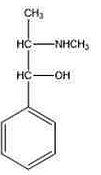
The above structure is of:- Which of the following materials are specified as a suitable diluent for powdered opium
A. Powdered grass
B. Powdered cocoa husk
C. Lactose colored with burnt sugar
D. Powdered digitalis
Choose the correct answer from the options given below: - HPTLC analysis is useful for following types of analysis of herbal drugs
A. Quantitative estimation of marker compound
B. Authentication of extracts
C. Detection of pesticides
D. Standardization of herbal drugs
Choose the correct answer from the options given below: - Anthranilic acid is an immediate precursor in the formation of
- Tropane nucleus is combination of
View More Questions
Top GPAT Enzymes Questions
- Nitric oxide synthase exists in ____.
- Class of enzymes which use oxygen as a hydrogen acceptor are known as
- The rheological and functional properties of synovial fluid are impaired due to :
- Active site for all serine proteases consists of which triad
- Match List I and List IIChoose the correct answer from the options given below:
List I Name of Vitamin List II Functions of Vitamins A Riboflavin I The electron acceptor for isocitrate dehydro- genase B Niacin II Decarboxylation of alpha-ketoglutarate dehydrogenas C Thiamine III Part of coenzyme A D Pantothenic acid IV Cofactor for succinate dehydrogenase V Enzyme activity regulator, such as for protein kinase C
Top GPAT Questions
- Match the symbols in the List I with the terms used in the List II of conductance measurements, and
List I
SymbolsList II
TermsA \(\Omega^{-1}\) I Specific conductance B \(∧\) II Electrical conductance C k III Specific resistance D \(\rho\) IV Equivalent conductance
Choose the correct answer from the options given below: - Cottrell’s method is used for the measurement of:
- Match the statements in List I with their correct answers in List II, respectively, in respect to modified 1st law of thermodynamics, and
List I
List II
A Constant heat (q = 0) I Isothermal B Reversible process at constant temperature (dT = 0) II Isometric C Constant volume (dV = 0) III Adiabatic D Constant pressure (dP = 0) IV Isobar
Choose the correct answer from the options given below: - Boric acid with molecular weight 61.83 was partitioned between water and amyl alcohol at 25 °C. The amount of boric acid was determined to be 0.24 g in 250 ml of amyl alcohol and 0.32 g in 100 ml water. The partition coefficient of boric acid between water and amyl alcohol, when calculated at molar concentration for each of the solution, is:
- Drugs ‘A’, ‘B’ and ‘C’ follow zero order, first order and second order degradation kinetics, respectively, but have the same rate constant. Which of the following statement is true in this respect:
View More Questions