Question:
Anthranilic acid is an immediate precursor in the formation of
Anthranilic acid is an immediate precursor in the formation of
Updated On: Mar 5, 2026
- Tyrosine
- Tryptophan
- Ornithine
- Methidine
Show Solution

Verified By Collegedunia
The Correct Option is B
Solution and Explanation
Anthranilic acid is a key intermediate in the biosynthesis of tryptophan, an essential amino acid. Let's go through the reasoning step-by-step to understand why tryptophan is the correct answer.
- The biosynthesis of tryptophan, an aromatic amino acid, starts with chorismic acid. Anthranilic acid is derived from chorismic acid in this pathway.
- Anthranilic acid undergoes further transformations to eventually form tryptophan. Specifically, it reacts with phosphoribosyl pyrophosphate to form N-(5'-phosphoribosyl)-anthranilate, which subsequently undergoes several enzymatic reactions to produce tryptophan.
- This pathway is unique to tryptophan synthesis and does not occur in the formation of the other amino acids listed in the options (tyrosine, ornithine, or methidine).
- Tyrosine is typically synthesized from phenylalanine or via the shikimic acid pathway, not directly involving anthranilic acid.
- Ornithine and methidine (methionine) are synthesized via entirely different pathways, primarily involving the urea cycle and methionine cycle, respectively.
Therefore, the correct answer is tryptophan, as anthranilic acid is a direct precursor in its synthesis route.
Was this answer helpful?
0
0
Top GPAT Pharmacognosy Questions
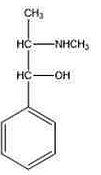
The above structure is of:- Which of the following materials are specified as a suitable diluent for powdered opium
A. Powdered grass
B. Powdered cocoa husk
C. Lactose colored with burnt sugar
D. Powdered digitalis
Choose the correct answer from the options given below: - HPTLC analysis is useful for following types of analysis of herbal drugs
A. Quantitative estimation of marker compound
B. Authentication of extracts
C. Detection of pesticides
D. Standardization of herbal drugs
Choose the correct answer from the options given below: - Tropane nucleus is combination of
Type of alkaloids present in Colchicum
View More Questions
Top GPAT Biogenetic pathways Questions
- In shikimic acid pathway, chorismate mutase converts chorismic acid to
- Which one of the following pairs of lipids & related compounds exbibit opposite biological activities
- Which one is not the characteristics of the Hexose Monophosphate Pathway?
- Arrange the following intermediates in the synthesis of isoprenoids in the right sequence
A. Squalence
B. Farnesyl PP
C. Geranyl PP
D. Acetyl CoA
E. Mevalonate
Choose the correct answer from the options given below: - Which one of the following is an autosomal dominant syndrome in its inheritance?
View More Questions
Top GPAT Questions
- Match the symbols in the List I with the terms used in the List II of conductance measurements, and
List I
SymbolsList II
TermsA \(\Omega^{-1}\) I Specific conductance B \(∧\) II Electrical conductance C k III Specific resistance D \(\rho\) IV Equivalent conductance
Choose the correct answer from the options given below: - Cottrell’s method is used for the measurement of:
- Match the statements in List I with their correct answers in List II, respectively, in respect to modified 1st law of thermodynamics, and
List I
List II
A Constant heat (q = 0) I Isothermal B Reversible process at constant temperature (dT = 0) II Isometric C Constant volume (dV = 0) III Adiabatic D Constant pressure (dP = 0) IV Isobar
Choose the correct answer from the options given below: - Boric acid with molecular weight 61.83 was partitioned between water and amyl alcohol at 25 °C. The amount of boric acid was determined to be 0.24 g in 250 ml of amyl alcohol and 0.32 g in 100 ml water. The partition coefficient of boric acid between water and amyl alcohol, when calculated at molar concentration for each of the solution, is:
- Drugs ‘A’, ‘B’ and ‘C’ follow zero order, first order and second order degradation kinetics, respectively, but have the same rate constant. Which of the following statement is true in this respect:
View More Questions