Question:
Choose the correct statement from the following:
(A) Tannin solution precipitate alkaloid
(B) Hydrolysable tannin produce gallic and ellagic acid by enzymatic and acid hydrolysis
(C) Condensed tannin converted into red color substance known as phlobaphene on acid and enzymatic hydrolysis
(D) Tannin are insoluble in water
Choose the correct statement from the following:
(A) Tannin solution precipitate alkaloid
(B) Hydrolysable tannin produce gallic and ellagic acid by enzymatic and acid hydrolysis
(C) Condensed tannin converted into red color substance known as phlobaphene on acid and enzymatic hydrolysis
(D) Tannin are insoluble in water
(A) Tannin solution precipitate alkaloid
(B) Hydrolysable tannin produce gallic and ellagic acid by enzymatic and acid hydrolysis
(C) Condensed tannin converted into red color substance known as phlobaphene on acid and enzymatic hydrolysis
(D) Tannin are insoluble in water
Show Hint
Tannins are classified into hydrolysable and condensed types—both have characteristic reactions important in crude drug analysis.
Updated On: Jul 14, 2026
- $ \text{A and C Only} $
- $ \text{B Only D Only} $
- $ \text{C Only} $
- $ \text{A, B and C are correct} $
Show Solution

Verified By Collegedunia
The Correct Option is D
Approach Solution - 1
- [A]: True. Tannins precipitate alkaloids, gelatin, and heavy metals due to their astringent and protein-binding properties.
- [B]: True. Hydrolysable tannins are broken down by enzymatic or acidic hydrolysis to yield gallic acid and ellagic acid.
- [C]: True. Condensed tannins (catechol-type) are polymerized to form phlobaphenes, which are red-brown insoluble substances.
- [D]: False. Tannins are highly water-soluble, and aqueous extracts are commonly used in phytochemical tests.
- [C]: True. Condensed tannins (catechol-type) are polymerized to form phlobaphenes, which are red-brown insoluble substances.
- [D]: False. Tannins are highly water-soluble, and aqueous extracts are commonly used in phytochemical tests.
Was this answer helpful?
1
0
Show Solution
Verified By Collegedunia
Approach Solution -2
This question presents four statements, A, B, C and D, about tannins and asks which combination of them is correct. Each option below can be checked against the known chemistry of tannins.
- A and C Only: Statement A says tannin solutions precipitate alkaloids, a well known property used in general alkaloid extraction and testing, so A is true. Statement C says condensed tannins convert into phlobaphenes, red coloured insoluble substances, on acid and enzymatic hydrolysis, which is also true. However, restricting the answer to only A and C leaves out statement B, which is also a correct statement, so this option is incomplete.
- B Only D Only: Statement B, that hydrolysable tannins yield gallic and ellagic acid on hydrolysis, is true, but statement D, that tannins are insoluble in water, is false since tannins are in fact freely soluble in water, a solubility that is used in most extraction and precipitation tests. Since this option depends on D being true, it cannot be correct.
- C Only: While statement C about phlobaphene formation is correct on its own, this option ignores that statements A and B are also true, so limiting the answer to C alone is incomplete.
- A, B and C are correct: Statement A, precipitation of alkaloids, statement B, gallic and ellagic acid from hydrolysable tannins, and statement C, phlobaphene formation from condensed tannins, are all supported by standard tannin chemistry, while statement D is false because tannins are water soluble. This makes A, B and C together the accurate set.
Checking every statement shows A, B and C hold true while D does not, since tannins are soluble, not insoluble, in water.
Therefore, the correct answer is A, B and C are correct.
Was this answer helpful?
0
0
Top GPAT Pharmacognosy Questions
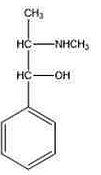
The above structure is of:- Which of the following materials are specified as a suitable diluent for powdered opium
A. Powdered grass
B. Powdered cocoa husk
C. Lactose colored with burnt sugar
D. Powdered digitalis
Choose the correct answer from the options given below: - HPTLC analysis is useful for following types of analysis of herbal drugs
A. Quantitative estimation of marker compound
B. Authentication of extracts
C. Detection of pesticides
D. Standardization of herbal drugs
Choose the correct answer from the options given below: - Anthranilic acid is an immediate precursor in the formation of
- Tropane nucleus is combination of
View More Questions
Top GPAT Introductory Pharmacognosy Questions
- Charaka, a physician belonged to which system of medicine?
- Methanolic extract of a crude drug powder when treated with magensium turnings and concentrated hydrochloric acid turned the solution magenta coloured The test is termed as
- Etoposide and Teniposide are the semisynthetic derivatives of
- Which of the following genera is not the source for tropane alkaloids
- Pterocarpus belongs to which family?
View More Questions
Top GPAT Questions
- Match the symbols in the List I with the terms used in the List II of conductance measurements, and
List I
SymbolsList II
TermsA \(\Omega^{-1}\) I Specific conductance B \(∧\) II Electrical conductance C k III Specific resistance D \(\rho\) IV Equivalent conductance
Choose the correct answer from the options given below: - Cottrell’s method is used for the measurement of:
- Match the statements in List I with their correct answers in List II, respectively, in respect to modified 1st law of thermodynamics, and
List I
List II
A Constant heat (q = 0) I Isothermal B Reversible process at constant temperature (dT = 0) II Isometric C Constant volume (dV = 0) III Adiabatic D Constant pressure (dP = 0) IV Isobar
Choose the correct answer from the options given below: - Boric acid with molecular weight 61.83 was partitioned between water and amyl alcohol at 25 °C. The amount of boric acid was determined to be 0.24 g in 250 ml of amyl alcohol and 0.32 g in 100 ml water. The partition coefficient of boric acid between water and amyl alcohol, when calculated at molar concentration for each of the solution, is:
- Drugs ‘A’, ‘B’ and ‘C’ follow zero order, first order and second order degradation kinetics, respectively, but have the same rate constant. Which of the following statement is true in this respect:
View More Questions