Question:
The key intermediate for the biosynthesis of C6-C3 units is:
The key intermediate for the biosynthesis of C6-C3 units is:
Updated On: Jul 14, 2026
- Pyruvic acid
- Shikimic acid
- Dehydroquinic acid
- Mevalonic acid
Show Solution

Verified By Collegedunia
The Correct Option is B
Approach Solution - 1
The correct option is (B): Shikimic acid.
Was this answer helpful?
0
0
Show Solution
Verified By Collegedunia
Approach Solution -2
The question asks which biosynthetic intermediate leads to compounds carrying a benzene ring attached to a three-carbon side chain, the C6-C3 phenylpropanoid unit. Let's check each option against its actual place in plant biosynthesis.
- Pyruvic acid: Pyruvic acid is an early glycolytic intermediate that combines with erythrose-4-phosphate to feed into the shikimic acid pathway, but it is only a starting feeder molecule rather than the key intermediate that directly gives rise to the aromatic C6-C3 skeleton.
- Shikimic acid: The shikimic acid pathway converts simple sugar-derived precursors into shikimic acid, which is then carried forward to chorismic acid and the aromatic amino acids phenylalanine and tyrosine. These amino acids are deaminated to give cinnamic acid derivatives, exactly the C6, aromatic ring, plus C3, three-carbon side chain, skeleton the question refers to, which is what makes shikimic acid the pivotal intermediate of this route.
- Dehydroquinic acid: Dehydroquinic acid is an earlier intermediate formed on the way to shikimic acid within the same pathway, but it sits before shikimic acid in the sequence and is not itself recognized as the branch point feeding the C6-C3 units.
- Mevalonic acid: Mevalonic acid belongs to an entirely separate biosynthetic route, the mevalonate pathway, which builds terpenoids and steroids from isoprene units, and it has no role in producing the aromatic C6-C3 phenylpropanoid skeleton.
Only shikimic acid sits at the branch point that leads directly toward the aromatic amino acids and their C6-C3 phenylpropanoid derivatives.
The correct answer is Shikimic acid.
Was this answer helpful?
0
0
Top GPAT Pharmacognosy Questions
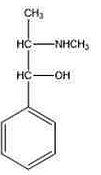
The above structure is of:- Which of the following materials are specified as a suitable diluent for powdered opium
A. Powdered grass
B. Powdered cocoa husk
C. Lactose colored with burnt sugar
D. Powdered digitalis
Choose the correct answer from the options given below: - HPTLC analysis is useful for following types of analysis of herbal drugs
A. Quantitative estimation of marker compound
B. Authentication of extracts
C. Detection of pesticides
D. Standardization of herbal drugs
Choose the correct answer from the options given below: - Anthranilic acid is an immediate precursor in the formation of
- Tropane nucleus is combination of
View More Questions
Top GPAT Alkaloids Questions
- Which of the following materials are specified as a suitable diluent for powdered opium
A. Powdered grass
B. Powdered cocoa husk
C. Lactose colored with burnt sugar
D. Powdered digitalis
Choose the correct answer from the options given below: - Tropane nucleus is combination of
Type of alkaloids present in Colchicum
- The ring structure present in strychnine is:
- Which one of the following alkaloid contains isoquinoline nucleus?
View More Questions
Top GPAT Questions
- Match the symbols in the List I with the terms used in the List II of conductance measurements, and
List I
SymbolsList II
TermsA \(\Omega^{-1}\) I Specific conductance B \(∧\) II Electrical conductance C k III Specific resistance D \(\rho\) IV Equivalent conductance
Choose the correct answer from the options given below: - Cottrell’s method is used for the measurement of:
- Match the statements in List I with their correct answers in List II, respectively, in respect to modified 1st law of thermodynamics, and
List I
List II
A Constant heat (q = 0) I Isothermal B Reversible process at constant temperature (dT = 0) II Isometric C Constant volume (dV = 0) III Adiabatic D Constant pressure (dP = 0) IV Isobar
Choose the correct answer from the options given below: - Boric acid with molecular weight 61.83 was partitioned between water and amyl alcohol at 25 °C. The amount of boric acid was determined to be 0.24 g in 250 ml of amyl alcohol and 0.32 g in 100 ml water. The partition coefficient of boric acid between water and amyl alcohol, when calculated at molar concentration for each of the solution, is:
- Drugs ‘A’, ‘B’ and ‘C’ follow zero order, first order and second order degradation kinetics, respectively, but have the same rate constant. Which of the following statement is true in this respect:
View More Questions