The highest possible energy of a photon in the emission spectrum of hydrogen atom is ______ eV.
[Given: Rydberg constant = 13.61 eV]
(round off to two decimal places)
[Given: Rydberg constant = 13.61 eV]
(round off to two decimal places)

Correct Answer: 13.6 - 13.62
Solution and Explanation
Highest Energy of Photon in Hydrogen Emission Spectrum
The highest possible energy of a photon in the emission spectrum of a hydrogen atom corresponds to the transition where the electron moves from an initial state with principal quantum number \( n_i \) to the final state \( n_f = 1 \). The maximum energy photon is emitted when the electron transitions from the highest possible initial state (\( n_i \rightarrow \infty \)) to \( n_f = 1 \).
The energy difference is given by the Rydberg formula:
\[ E = R_H \left( \frac{1}{n_f^2} - \frac{1}{n_i^2} \right)^{-1} \]
where \( R_H = 13.61 \, \text{eV} \).
Step 1: When \( n_i \to \infty \)
When \( n_i \to \infty \), \( \frac{1}{n_i^2} \to 0 \), thus the energy difference simplifies to:
\[ E = 13.61 \, \text{eV} \left( \frac{1}{1} - 0 \right) = 13.61 \, \text{eV} \]
Step 2: Final Answer
The energy of the photon is \( 13.61 \, \text{eV} \), which falls within the expected range of \( (13.6, 13.62) \, \text{eV} \).
Conclusion
Therefore, the highest possible energy of a photon in the emission spectrum of a hydrogen atom is 13.61 eV, rounded to two decimal places.
Top IIT JAM CY Physical Chemistry Questions
- The diagram that best describes the variation of viscosity (𝜂) of water with temperature at 1 atm is
The SI unit of the molar conductivity of an electrolyte solution is
- The system with the lowest zero-point energy when it is confined to a one dimensional box of length 𝐿 is
- Adsorption of a gas on a solid surface follows the Langmuir isotherm. If \(\frac{ k_a}{k_d}\)=1.0 bar-1 , the fraction of adsorption sites occupied by the gas at equilibrium under 2.0 bar pressure of the gas at 25 °C is
( ka and kd are the rate constants for adsorption and desorption processes, respectively, at 25 °C) - The vapor pressure of a dilute solution of a non-volatile solute and the vapor pressure of the pure solvent at the same temperature are P and P*, respectively. \(\frac{P^*-P}{P^*}\) is equal to
(Assume that the vapor phase behaves as an ideal gas)
Top IIT JAM CY Spectroscopy Questions
- A 0.06 g/mL solution of (S)-1-phenylethanol placed in a 5 cm long polarimeter tube shows an optical rotation of 1.2o . The specific rotation is ______ o .
(round off to the nearest integer) - The number of singlets observed in the 1H NMR spectrum of P is ____.

- The harmonic vibrational frequency of a diatomic molecule is 2000 cm−1 . Its zero point energy is eV.
[Given: Planck’s constant = 6.62x10⁻³⁴ J s; 1 eV = 1.6x10⁻¹⁹ J]
(round off to two decimal places) - The stretching frequency of CO in H3B.CO is
- For the following compound
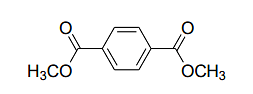
the number of signals expected in the 1H NMR spectrum is _________.
Top IIT JAM CY Questions
- The structure of Q in the following reaction scheme is.

- The major product of the reaction is

- The rate of addition of 1-hexyl radical to the given molecules follows the order

- The major product of the reaction is

- The diagram that best describes the variation of viscosity (𝜂) of water with temperature at 1 atm is