Question:
The correct relationship between the molecules X and Y is that, they are _ _ _.

The correct relationship between the molecules X and Y is that, they are _ _ _.
Show Hint
If all chiral centers are inverted → enantiomersIf only some are inverted → diastereomers
Updated On: Jun 1, 2026
- regioisomers
- diastereomers
- enantiomers
- identical molecules
Show Solution

Verified By Collegedunia
The Correct Option is B
Solution and Explanation
Step 1: Identify stereocenters.
Both molecules X and Y contain multiple stereocenters (chiral centers) in the ring systemThus, stereoisomerism is possible
Step 2: Compare spatial arrangement.
On comparing X and Y, we observe that the configuration at one or more stereocenters is different, but not all stereocenters are inverted
Step 3: Apply definition.
\[ \text{Enantiomers} \rightarrow \text{All stereocenters inverted (mirror images)} \] \[ \text{Diastereomers} \rightarrow \text{Some but not all stereocenters differ} \] Since X and Y are not mirror images of each other but differ in configuration at certain stereocenters, they are diastereomers
Step 4: Eliminate other options.
Regioisomers differ in position of functional groups, which is not the case hereIdentical molecules would have same configuration at all centers
Step 5: Conclusion.
\[ \boxed{\text{diastereomers}} \]
Both molecules X and Y contain multiple stereocenters (chiral centers) in the ring systemThus, stereoisomerism is possible
Step 2: Compare spatial arrangement.
On comparing X and Y, we observe that the configuration at one or more stereocenters is different, but not all stereocenters are inverted
Step 3: Apply definition.
\[ \text{Enantiomers} \rightarrow \text{All stereocenters inverted (mirror images)} \] \[ \text{Diastereomers} \rightarrow \text{Some but not all stereocenters differ} \] Since X and Y are not mirror images of each other but differ in configuration at certain stereocenters, they are diastereomers
Step 4: Eliminate other options.
Regioisomers differ in position of functional groups, which is not the case hereIdentical molecules would have same configuration at all centers
Step 5: Conclusion.
\[ \boxed{\text{diastereomers}} \]
Was this answer helpful?
0
0
Top IIT JAM CY Organic Chemistry Questions
- The structure of Q in the following reaction scheme is.

- The major product of the reaction is

- The rate of addition of 1-hexyl radical to the given molecules follows the order

- The major product of the reaction is

- An alkaline (NaOH) solution of a compound produces a yellow colored solution on addition of NaBO3. The compound is
View More Questions
Top IIT JAM CY Stereochemistry Questions
- The most stable conformation of Y and that of Z are

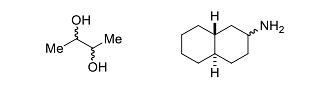
- The sum of the total number of stereoisomers (including enantiomers) present in the following molecules is _____.
- In the following reaction
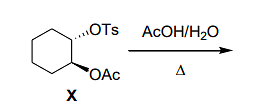
optically pure ester X formed product that did not exhibit optical rotation ([α]D=0) due to the formation of
(Note: Ts=para-toluenesulfonyl; Ac=acetyl) - Among the following, the chiral molecule(s) is/are
- Exhaustive hydrogenation of the following compound
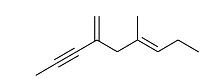
under Pd/C generates a saturated hydrocarbon as the product.
The number of stereoisomers possible for this product is _______.
View More Questions
Top IIT JAM CY Questions
- The structure of Q in the following reaction scheme is.
- The major product of the reaction is
- The rate of addition of 1-hexyl radical to the given molecules follows the order
- The major product of the reaction is
- The diagram that best describes the variation of viscosity (𝜂) of water with temperature at 1 atm is
View More Questions