Size of a pilot plant batch is:
Show Hint
- Pilot plant batch is typically 1/10th of the production batch for scale-up and validation.
- It helps optimize manufacturing parameters before large-scale production.
- Marketing batches refer to batches intended for commercial distribution and do not determine pilot batch size.
- \( \frac{1}{10} \)th of marketing batch
- \( \frac{1}{5} \)th of production batch
- \( \frac{1}{5} \)th of marketing batch
- \( \frac{1}{10} \)th of production batch

The Correct Option is D
Approach Solution - 1
A pilot plant batch is a small-scale version of a full-scale production batch and is used to optimize manufacturing parameters before large-scale production. The typical size of a pilot batch is approximately 1/10th of the production batch size, allowing for process validation and testing before large-scale commercialization.
Why Other Options Are Incorrect: - (A) \( \frac{1}{10} \)th of marketing batch: Marketing batches refer to those distributed in the market, which may not directly correlate with production scaling.
- (B) \( \frac{1}{5} \)th of production batch: Pilot batches are typically smaller, around 1/10th of the production scale.
- (C) \( \frac{1}{5} \)th of marketing batch: Marketing batches are usually determined based on regulatory approvals and distribution plans, not production scaling.
Thus, the correct answer is that a pilot plant batch is typically 1/10th of the production batch, ensuring cost-effective testing and optimization before full-scale manufacturing.
Approach Solution -2
Pilot plant scale-up sits between laboratory development and full commercial manufacturing, and this question is checking the standard size ratio used at that intermediate stage. Reviewing each option:
- \( \frac{1}{10} \)th of marketing batch: "Marketing batch" refers to batches released for sale under regulatory approval, and this is not the reference point pilot batch size is conventionally measured against, so this comparison does not match standard scale-up terminology.
- \( \frac{1}{5} \)th of production batch: While production batch is the correct reference point, a ratio of one-fifth is larger than the accepted convention for a pilot batch, which is meant to stay small enough to limit the cost and risk of trial runs.
- \( \frac{1}{5} \)th of marketing batch: This combines the wrong reference point, marketing batch, with a ratio that is also not the standard figure used for pilot scale, so it does not fit either part of the accepted definition.
- \( \frac{1}{10} \)th of production batch: A pilot batch is meant to be large enough to reveal scale-dependent problems with equipment and process parameters, yet small enough to keep material and cost losses low if the batch fails. Industry convention places this at about one-tenth the size of a full production batch, giving a batch that behaves closely enough to production scale to be predictive, without the expense of running a full-size trial.
The reference point that matters here is the production batch, the batch size used in routine full-scale manufacturing, and the accepted ratio against that reference is one-tenth, not one-fifth.
So the correct answer is \( \frac{1}{10} \)th of the production batch.
Top GPAT Pharmacognosy Questions
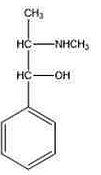
The above structure is of:- Which of the following materials are specified as a suitable diluent for powdered opium
A. Powdered grass
B. Powdered cocoa husk
C. Lactose colored with burnt sugar
D. Powdered digitalis
Choose the correct answer from the options given below: - HPTLC analysis is useful for following types of analysis of herbal drugs
A. Quantitative estimation of marker compound
B. Authentication of extracts
C. Detection of pesticides
D. Standardization of herbal drugs
Choose the correct answer from the options given below: - Anthranilic acid is an immediate precursor in the formation of
- Tropane nucleus is combination of
Top GPAT Principles of plant classification Questions
- All members of this order are trees or shrubs; mostly evergreen with needle - like leaves ; monoecious or dioecious - sporophylls usually in cones. Resin ducts occur in all parts :
- In Gambir - fluorescin test the petroleum spirit layer shows a strong :
- What molecular feature is penicillin G is said o mimic
- What structure is formed if the acyl side chain of penicillin is hydrolysed
- All of the following are leaf constants EXCEPT
Top GPAT Questions
- Match the symbols in the List I with the terms used in the List II of conductance measurements, and
List I
SymbolsList II
TermsA \(\Omega^{-1}\) I Specific conductance B \(∧\) II Electrical conductance C k III Specific resistance D \(\rho\) IV Equivalent conductance
Choose the correct answer from the options given below: - Cottrell’s method is used for the measurement of:
- Match the statements in List I with their correct answers in List II, respectively, in respect to modified 1st law of thermodynamics, and
List I
List II
A Constant heat (q = 0) I Isothermal B Reversible process at constant temperature (dT = 0) II Isometric C Constant volume (dV = 0) III Adiabatic D Constant pressure (dP = 0) IV Isobar
Choose the correct answer from the options given below: - Boric acid with molecular weight 61.83 was partitioned between water and amyl alcohol at 25 °C. The amount of boric acid was determined to be 0.24 g in 250 ml of amyl alcohol and 0.32 g in 100 ml water. The partition coefficient of boric acid between water and amyl alcohol, when calculated at molar concentration for each of the solution, is:
- Drugs ‘A’, ‘B’ and ‘C’ follow zero order, first order and second order degradation kinetics, respectively, but have the same rate constant. Which of the following statement is true in this respect: