Question:
One of the following is an example of chemical method of evaluation
One of the following is an example of chemical method of evaluation
Updated On: Feb 24, 2026
- Determination of volatile oil
- Determination of refractive index
- Detection of alkaloids
- Determination of vascular bundles
Show Solution

Verified By Collegedunia
The Correct Option is C
Solution and Explanation
The question asks us to identify an example of a chemical method of evaluation from the provided options. The correct answer is "Detection of alkaloids". Let's explore why this option is correct and why the others are not:
- Determination of volatile oil: This is a physical method, commonly involving processes like steam distillation, where the volatile oils are separated based on their physical properties like boiling point. Thus, it is not a chemical method of evaluation.
- Determination of refractive index: This is another physical method, which involves measuring how light is bent, or refracted, when it passes through a substance. This method does not involve any chemical reaction or change.
- Detection of alkaloids: This is indeed a chemical method. Alkaloids are detected using chemical reactions with specific reagents like Dragendorff's reagent, Mayer's reagent, etc., which react with alkaloids to form colored precipitates. This is a definitive chemical method because it involves chemical analysis and identification.
- Determination of vascular bundles: This is a morphological or anatomical analysis often determined using a microscope to observe the arrangement of vascular tissues in plant samples. It does not involve a chemical process.
The detection of alkaloids involves the use of chemical reagents that react specifically with the alkaloid compounds to form identifiable products, thus making it a chemical method. Therefore, the option "Detection of alkaloids" is the correct answer.
Was this answer helpful?
0
0
Top GPAT Pharmacognosy Questions
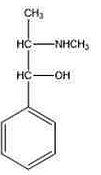
The above structure is of:- Which of the following materials are specified as a suitable diluent for powdered opium
A. Powdered grass
B. Powdered cocoa husk
C. Lactose colored with burnt sugar
D. Powdered digitalis
Choose the correct answer from the options given below: - HPTLC analysis is useful for following types of analysis of herbal drugs
A. Quantitative estimation of marker compound
B. Authentication of extracts
C. Detection of pesticides
D. Standardization of herbal drugs
Choose the correct answer from the options given below: - Anthranilic acid is an immediate precursor in the formation of
- Tropane nucleus is combination of
View More Questions
Top GPAT Adulteration and evaluation of crude drugs Questions
Top GPAT Questions
- Match the symbols in the List I with the terms used in the List II of conductance measurements, and
List I
SymbolsList II
TermsA \(\Omega^{-1}\) I Specific conductance B \(∧\) II Electrical conductance C k III Specific resistance D \(\rho\) IV Equivalent conductance
Choose the correct answer from the options given below: - Cottrell’s method is used for the measurement of:
- Match the statements in List I with their correct answers in List II, respectively, in respect to modified 1st law of thermodynamics, and
List I
List II
A Constant heat (q = 0) I Isothermal B Reversible process at constant temperature (dT = 0) II Isometric C Constant volume (dV = 0) III Adiabatic D Constant pressure (dP = 0) IV Isobar
Choose the correct answer from the options given below: - Boric acid with molecular weight 61.83 was partitioned between water and amyl alcohol at 25 °C. The amount of boric acid was determined to be 0.24 g in 250 ml of amyl alcohol and 0.32 g in 100 ml water. The partition coefficient of boric acid between water and amyl alcohol, when calculated at molar concentration for each of the solution, is:
- Drugs ‘A’, ‘B’ and ‘C’ follow zero order, first order and second order degradation kinetics, respectively, but have the same rate constant. Which of the following statement is true in this respect:
View More Questions