Question:
Lycopodium spores are used in quantitative microscopy for the following:
Lycopodium spores are used in quantitative microscopy for the following:
Updated On: Feb 24, 2026
- Determine % purity of drugs
- Estimation of percentage of foreign organic matter
- Determination of palisade ratio
- Measurement of area of single layered tissue
Show Solution

Verified By Collegedunia
The Correct Option is C
Solution and Explanation
To determine the correct usage of Lycopodium spores in quantitative microscopy within the context of Pharmacognosy, let's analyze each of the given options:
- Determine % purity of drugs: Lycopodium spores are not typically used for determining the percentage purity of drugs. This process usually involves chemical analysis techniques like chromatography, spectrophotometry, or titration.
- Estimation of percentage of foreign organic matter: While microscopy can aid in the visualization of foreign organic matter, Lycopodium spores are not specifically utilized for estimating its percentage. This is generally done using different assessment methods in quality control.
- Determination of palisade ratio: In Pharmacognosy, Lycopodium spores are used as a calibrative measure in microscopic analysis for determining the palisade ratio, which is the ratio of the number of palisade cells to the number of epidermal cells. This technique is used for the identification and standardization of leaf drugs.
- Measurement of area of single layered tissue: While microscopy can measure the area of tissues, Lycopodium spores do not directly aid in this measurement. Techniques like micrometry or image analysis software are more commonly utilized for such purposes.
Based on the above analysis, the correct answer is:
- Determination of palisade ratio
Therefore, Lycopodium spores are specifically used in quantitative microscopy to determine the palisade ratio. This is a crucial step in the evaluation and authentication of botanical drug materials.
Was this answer helpful?
0
0
Top GPAT Pharmacognosy Questions
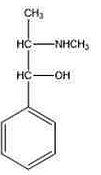
The above structure is of:- Which of the following materials are specified as a suitable diluent for powdered opium
A. Powdered grass
B. Powdered cocoa husk
C. Lactose colored with burnt sugar
D. Powdered digitalis
Choose the correct answer from the options given below: - HPTLC analysis is useful for following types of analysis of herbal drugs
A. Quantitative estimation of marker compound
B. Authentication of extracts
C. Detection of pesticides
D. Standardization of herbal drugs
Choose the correct answer from the options given below: - Anthranilic acid is an immediate precursor in the formation of
- Tropane nucleus is combination of
View More Questions
Top GPAT Quantitative microscopy Questions
- The size Of Lycopodium sp ores is :
- Choose the right combination from the following
(1) Diacytic stomata and sessile Trichome
(2) Paracytic stomata and Unicellular and multi cellular
(3) Anomocytic stomata and Unicellular and multi cellular Trichome
(4) Anisocytic stomata and Multicellular covering trichome(A) Datuar
(B) Vasaka
(C) Senna
(D) Digitalis - The quantitative value determined for the identification of leaf drug remains constant throughout the age of the plant EXCEPT:
Top GPAT Questions
- Match the symbols in the List I with the terms used in the List II of conductance measurements, and
List I
SymbolsList II
TermsA \(\Omega^{-1}\) I Specific conductance B \(∧\) II Electrical conductance C k III Specific resistance D \(\rho\) IV Equivalent conductance
Choose the correct answer from the options given below: - Cottrell’s method is used for the measurement of:
- Match the statements in List I with their correct answers in List II, respectively, in respect to modified 1st law of thermodynamics, and
List I
List II
A Constant heat (q = 0) I Isothermal B Reversible process at constant temperature (dT = 0) II Isometric C Constant volume (dV = 0) III Adiabatic D Constant pressure (dP = 0) IV Isobar
Choose the correct answer from the options given below: - Boric acid with molecular weight 61.83 was partitioned between water and amyl alcohol at 25 °C. The amount of boric acid was determined to be 0.24 g in 250 ml of amyl alcohol and 0.32 g in 100 ml water. The partition coefficient of boric acid between water and amyl alcohol, when calculated at molar concentration for each of the solution, is:
- Drugs ‘A’, ‘B’ and ‘C’ follow zero order, first order and second order degradation kinetics, respectively, but have the same rate constant. Which of the following statement is true in this respect:
View More Questions