Which pyramid is always upright in an ecosystem?
Show Hint
- Pyramid of energy
- Pyramid of biomass
- Pyramid of numbers
- All of the above

The Correct Option is A
Approach Solution - 1
To determine which pyramid is always upright in an ecosystem, we need to understand the different types of ecological pyramids: pyramid of energy, pyramid of biomass, and pyramid of numbers.
- Pyramid of Energy:
- This pyramid represents the flow of energy at each trophic level in an ecosystem.
- It is always upright because energy is lost as heat at each successive trophic level, following the second law of thermodynamics. Approximately only 10% of the energy is transferred from one level to the next.
- Hence, the pyramid of energy is always upright, regardless of the ecosystem.
- Pyramid of Biomass:
- This pyramid shows the total mass of all the living organisms at each trophic level.
- It can be inverted in certain ecosystems; for example, in aquatic ecosystems, where small biomass of phytoplankton supports a larger biomass of zooplankton.
- Therefore, the shape of a biomass pyramid is not always constant.
- Pyramid of Numbers:
- This pyramid displays the number of organisms at each trophic level.
- It can also be inverted, especially in parasitic chains where a large number of parasites depend on a single host organism.
- Hence, the pyramid of numbers is not always upright.
Based on the above explanations, the pyramid that is always upright in an ecosystem is the Pyramid of Energy because it accurately represents the consistent decrease in energy at successive trophic levels.
Approach Solution -2
Ecological pyramids represent the relationship between organisms at different trophic levels in an ecosystem. These pyramids can be of numbers, biomass, or energy.
Step 2: Understanding the pyramid of energy.
The pyramid of energy shows the flow of energy from one trophic level to the next. Since energy is lost at every trophic level (mainly as heat), the amount of energy always decreases as we move up the food chain.
Step 3: Analysis of different pyramids.
Pyramid of numbers: May be upright or inverted depending on the ecosystem.
Pyramid of biomass: Can be inverted in aquatic ecosystems.
Pyramid of energy: Always upright because energy decreases at each successive trophic level according to the second law of thermodynamics.
Step 4: Conclusion.
The pyramid of energy is always upright in all ecosystems because energy flow is unidirectional and decreases at each trophic level.
Top GATE XL Life Science Questions
- Which one of the following molecules captures \(CO_2\) in the \(CO_4\) cycle?
- Which one of the following methods separates biomolecules based on their hydrodynamic volumes?
- Which one of the following restriction endonucleases is a blunt cutter?
- Which one of the following ion channels opens to repolarize the neuronal membrane when an action potential is generated?
- Which one of the following is the most sensitive immunoassay?
Top GATE XL Botany Questions
Correctly match the carnivorous plants (Group I) with the organs (Group II) they modify to trap the prey:

- Which of the following molecular approaches can be used to generate complete knock-out of a target gene in plants?
- If an egg cell of a diploid plant species has 10 chromosomes, the expected number of chromosomes in a double trisomic somatic cell of this species would be ............. (Answer in integer).
In the history of photosynthetic research, the empirical reaction of photosynthesis was first proposed for green plants (equation 1), followed by another reaction for purple sulfur bacteria (equation 2), leading to a generalized equation for photosynthesis (equation 3), where \( {H}_2{A} \) in equation 3 is a generalized electron donor.
\[ {CO}_2 + {H}_2{O} \xrightarrow{{light}} {(CH}_2{O)} + {O}_2 \quad {(equation 1)} \] \[ {CO}_2 + 2{H}_2{S} \xrightarrow{{light}} {(CH}_2{O)} + {H}_2{O} + 2{S} \quad {(equation 2)} \] \[ {CO}_2 + 2{H}_2{A} \xrightarrow{{light}} {(CH}_2{O)} + {H}_2{O} + 2{A} \quad {(equation 3)} \] Where \( {H}_2{A} \) in equation 3 is a generalized electron donor. Which one of the following statements is DISPROVEN by equation 3?
Correctly match the photosynthetic pathways (Group I) with their first stable products (Group II) in respective plants (Group III):

Top GATE XL Questions
- The CORRECT order of electronegativity is
- Which one of the following is the CORRECT representation of the variation of the Gibbs free energy (G) of a substance with temperature (T) at constant pressure?
- Among the following, the structure representing histidine is
- The CORRECT order of acidity of the following compounds is
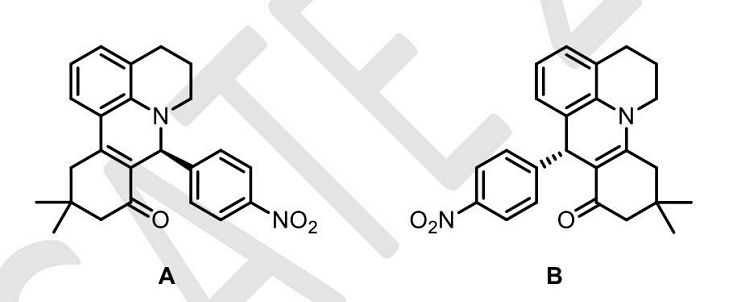
- The molecules A and B are a pair of___