Question:
The closed-loop characteristic equation of a system is given by
\[
s^4 + 2s^3 + 8s^2 + 8s + 16 = 0
\]
The frequency of oscillations of this closed-loop system at steady state is \(\underline{\hspace{2cm}}\) rad/s.
The closed-loop characteristic equation of a system is given by
\[
s^4 + 2s^3 + 8s^2 + 8s + 16 = 0
\]
The frequency of oscillations of this closed-loop system at steady state is \(\underline{\hspace{2cm}}\) rad/s.
Show Hint
Use the characteristic equation to find the system's natural frequency, which determines the frequency of oscillations.
Updated On: Dec 24, 2025
- 1
- 2
- 4
- 8
Show Solution

Verified By Collegedunia
The Correct Option is B
Solution and Explanation
The frequency of oscillations for a system can be found using the characteristic equation and analyzing the system's natural frequency. The standard form of the characteristic equation is:
\[
s^4 + 2\zeta \omega_n s^3 + \omega_n^2 s^2 + 2\zeta \omega_n s + \omega_n^2 = 0
\]
Where:
- \( \omega_n \) is the natural frequency
- \( \zeta \) is the damping ratio
Comparing the given equation: \[ s^4 + 2s^3 + 8s^2 + 8s + 16 = 0 \] We can match terms with the standard form. In this case:
- The coefficient of \( s^3 \) gives \( 2\zeta \omega_n = 2 \), so \( \zeta \omega_n = 1 \).
- The coefficient of \( s^2 \) gives \( \omega_n^2 = 8 \), so \( \omega_n = \sqrt{8} = 2.83 \).
From \( \zeta \omega_n = 1 \), we find that \( \zeta = \frac{1}{\omega_n} = \frac{1}{2.83} = 0.354 \). Thus, the frequency of oscillation at steady state is the natural frequency \( \omega_n \), which is approximately 2 rad/s. Thus, the correct answer is (B).
- \( \omega_n \) is the natural frequency
- \( \zeta \) is the damping ratio
Comparing the given equation: \[ s^4 + 2s^3 + 8s^2 + 8s + 16 = 0 \] We can match terms with the standard form. In this case:
- The coefficient of \( s^3 \) gives \( 2\zeta \omega_n = 2 \), so \( \zeta \omega_n = 1 \).
- The coefficient of \( s^2 \) gives \( \omega_n^2 = 8 \), so \( \omega_n = \sqrt{8} = 2.83 \).
From \( \zeta \omega_n = 1 \), we find that \( \zeta = \frac{1}{\omega_n} = \frac{1}{2.83} = 0.354 \). Thus, the frequency of oscillation at steady state is the natural frequency \( \omega_n \), which is approximately 2 rad/s. Thus, the correct answer is (B).
Was this answer helpful?
0
0
Top GATE BM Measurements and Control Systems Questions
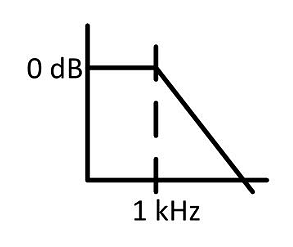
- The Bode plot of a 2nd order low pass filter is shown in the figure below. What is the frequency at which the attenuation is 80 dB ?
- For the balanced Owen-bridge circuit shown in the figure, the values of $L_x$ and $R_x$ are:

- The block diagrams of an ideal system and a real system with their impulse responses are shown below. An auxiliary path is added to the delayed impulse response in the real system. For a unit impulse input ($x(t)=\delta(t)$) to both systems, gain $\beta$ is chosen such that $y(4T)$ is the same for both systems. The value of $\beta$ is _________.

- Independent voltage measurements \((\mu \pm \sigma)\) of three sensors where \(\mu\) and \(\sigma\) are the mean and standard deviation of the measurements, respectively are as follows: \(v_1 = 4.52 \pm 0.02 \, \text{V}, \, v_2 = 4.21 \pm 0.20 \, \text{V}, \, v_3 = 3.96 \pm 0.15 \, \text{V}\). The measurement uncertainty in \(v_1 + v_2 + v_3\) is ________ V (rounded off to two decimal places).
- A moving coil voltmeter has an internal resistance of 50 \(\Omega\). The scale of the meter is divided into 100 equal divisions. When a potential of 1 V is applied to terminals of the voltmeter, a deflection of 100 divisions is obtained. However, it is desired that when a potential of 500 V is applied to the terminals, a deflection of 100 divisions should be obtained. The value of resistance that needs to be connected in series to achieve this is ________ \(\Omega\).
View More Questions
Top GATE BM Control Systems Questions
- For a linear stable second order system, if the unit step response is such that the peak time is twice the rise time, the system is \(\underline{\hspace{2cm}}\).
- Consider a type 2, unity feedback system. The intersection of the initial -40 dB/dec segment of its Bode plot with the zero dB line occurs at a frequency of 2 rad/s. The acceleration error constant of the system \(K_a\) is \(\underline{\hspace{2cm}}\).
- Consider a unity feedback system with closed-loop transfer function \[ C(s) = \frac{s + 90}{s^2 + 10s + 90} \] The steady-state error with respect to a unit ramp input is \(\underline{\hspace{2cm}}\). (rounded off to one decimal place)
- A control system shown in the figure below has a forward gain \(G = 100\). An input \(V_{in} = 5\) volts is supplied to the system. What is the absolute error between the output \(V_{out}\) and input \(V_{in}\) in volts?

Top GATE BM Questions
- What is the value of the following complex line integral counter-clockwise ?
\(\oint_{|z|=3}\frac{8}{z(z-2)(z-4)}dz\) - To solve the equation x = 2 cos x using Newton-Raphson's method, which one of the following iterations should be used ?
- During the repolarization phase of a neuron, the cell is brought back to the resting potential by the action of a Sodium-Potassium pump. Which one of the following statements is TRUE for the active transport of Na+ and K+ ions through the cell membrane ?
- The cardiac rhythm in a healthy human heart originates from ______.
- Which one of the following events is NOT typically encountered in diagnostic X-ray projection radiography ?
View More Questions