Question:
Select the correct statement/s from the following:
- [A.] Spermatogonia always undergo meiotic cell division.
- [B.] Primary spermatocytes divide by mitotic cell division.
- [C.] Secondary spermatocytes have 23 chromosomes and undergo second meiotic division.
- [D.] Spermatozoa are transformed into spermatids.
Select the correct statement/s from the following:
- [A.] Spermatogonia always undergo meiotic cell division.
- [B.] Primary spermatocytes divide by mitotic cell division.
- [C.] Secondary spermatocytes have 23 chromosomes and undergo second meiotic division.
- [D.] Spermatozoa are transformed into spermatids.
Show Hint
The haploid phase of spermatogenesis begins from secondary spermatocyte stage.
Updated On: Jun 3, 2026
- A and C only
- C only
- D only
- B and C only
Show Solution

Verified By Collegedunia
The Correct Option is B
Solution and Explanation
Concept:
Spermatogenesis is the process of sperm formation inside seminiferous tubules of testes. It involves three major phases:
Step 1: Analyze statement A carefully.
Spermatogonia are diploid germ cells present at the basal region of seminiferous tubules. Their primary role is to multiply by mitotic divisions to maintain germ cell population. Only some spermatogonia differentiate into primary spermatocytes which later undergo meiosis. Therefore, spermatogonia do not always undergo meiotic division. Hence, statement A is incorrect.
Step 2: Analyze statement B carefully.
Primary spermatocytes are diploid cells formed from spermatogonia. These cells undergo Meiosis I, not mitosis. The first meiotic division reduces chromosome number from diploid to haploid and produces secondary spermatocytes. Hence, statement B is incorrect.
Step 3: Analyze statement C carefully.
Secondary spermatocytes are haploid cells containing 23 chromosomes. These cells undergo Meiosis II to produce spermatids. Since this statement correctly describes chromosome number and type of division, statement C is correct.
Step 4: Analyze statement D carefully.
Spermatids transform into spermatozoa through a differentiation process called spermiogenesis. The statement given in the question reverses the process incorrectly. Therefore, statement D is incorrect.
Step 5: Determine the correct answer.
Only statement C is correct. Hence, the correct answer is: \[ \boxed{\text{C only}} \]
- Multiplication phase
- Meiotic phase
- Spermiogenesis
Step 1: Analyze statement A carefully.
Spermatogonia are diploid germ cells present at the basal region of seminiferous tubules. Their primary role is to multiply by mitotic divisions to maintain germ cell population. Only some spermatogonia differentiate into primary spermatocytes which later undergo meiosis. Therefore, spermatogonia do not always undergo meiotic division. Hence, statement A is incorrect.
Step 2: Analyze statement B carefully.
Primary spermatocytes are diploid cells formed from spermatogonia. These cells undergo Meiosis I, not mitosis. The first meiotic division reduces chromosome number from diploid to haploid and produces secondary spermatocytes. Hence, statement B is incorrect.
Step 3: Analyze statement C carefully.
Secondary spermatocytes are haploid cells containing 23 chromosomes. These cells undergo Meiosis II to produce spermatids. Since this statement correctly describes chromosome number and type of division, statement C is correct.
Step 4: Analyze statement D carefully.
Spermatids transform into spermatozoa through a differentiation process called spermiogenesis. The statement given in the question reverses the process incorrectly. Therefore, statement D is incorrect.
Step 5: Determine the correct answer.
Only statement C is correct. Hence, the correct answer is: \[ \boxed{\text{C only}} \]
Was this answer helpful?
0
0
Top CUET Biology Questions
Select the statements that are CORRECT regarding patterns of biodiversity.
(A) Species diversity increases as we move away from the equator towards the poles(B) The tropical Amazon rain forest in South America has the greatest biodiversity on earth.(C) There is more solar energy available in the temperate region than tropics.(D) Tropical environments are less seasonal relatively more constant and predictableWhich of the following hormone is not produced by placenta ?
- Individuals with karyotype of 44+XXY having overall masculine development with few feminine development like Gynaecomastia has _______ chromosomal disorder.
- Match List - I with List - II.Choose the correct answer from the options given below :
List - I
List - II
A Streptokinase I Blood-Cholestrol lowering agents B Cyclosporin II Clot Buster C Statins III Propionibacterium sharmanii D Swiss Cheese IV Immuno suppressive agent Which of the following option determines percolation and water holding capacity of soils ?
View More Questions
Top CUET human reproduction Questions
Which of the following hormone is not produced by placenta ?
- Individuals with karyotype of 44+XXY having overall masculine development with few feminine development like Gynaecomastia has _______ chromosomal disorder.
- Sequentially arrange the developmental stages of human spermatozoon :
(A) Secondary Spermatocyte
(B) Spermatid
(C) Spermatozoa
(D) Spermatogonia
(E) Primary spermatocytes
Choose the correct answer from the options given below : Match List - I with List - II.
List - I
List - II
A Prostate gland I Store and transport sperms B Leydig cells II Male external genitilia C Ejaculatory duct III Male accessory gland D Penis IV Testicular hormones Choose the correct answer from the options given below :
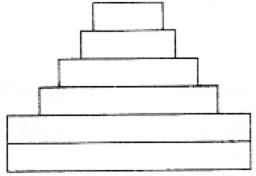
- The shape of pyramids gives the reflection of growth status of a population. Identify the growth status depicted by the given pyramid.
View More Questions
Top CUET Questions
Select the statements that are CORRECT regarding patterns of biodiversity.
(A) Species diversity increases as we move away from the equator towards the poles(B) The tropical Amazon rain forest in South America has the greatest biodiversity on earth.(C) There is more solar energy available in the temperate region than tropics.(D) Tropical environments are less seasonal relatively more constant and predictableWhich of the following hormone is not produced by placenta ?
- Individuals with karyotype of 44+XXY having overall masculine development with few feminine development like Gynaecomastia has _______ chromosomal disorder.
- Match List - I with List - II.Choose the correct answer from the options given below :
List - I
List - II
A Streptokinase I Blood-Cholestrol lowering agents B Cyclosporin II Clot Buster C Statins III Propionibacterium sharmanii D Swiss Cheese IV Immuno suppressive agent Which of the following option determines percolation and water holding capacity of soils ?
View More Questions