Question:
Which organism causing acute bacterial prostatitis ?
Which organism causing acute bacterial prostatitis ?
Updated On: Jul 14, 2025
- Enterococcus
- Streptococcus viridans
- Peptostreptococcus
- E.coli
Show Solution

Verified By Collegedunia
The Correct Option is D
Solution and Explanation
Acute bacterial prostatitis is a sudden bacterial infection of the prostate gland, leading to inflammation and a rapid onset of symptoms such as fever, chills, dysuria, and pelvic pain. The most common causative agent of this condition is Escherichia coli (E.coli). E.coli is a Gram-negative bacterium normally found in the intestinal tract, and it is responsible for the majority of cases, primarily by ascending through the urethra to infect the prostate. Understanding the microbial etiology is crucial for appropriate antibiotic treatment.
| Organism | Commonly Associated with Acute Bacterial Prostatitis |
| Enterococcus | No |
| Streptococcus viridans | No |
| Peptostreptococcus | No |
| E.coli | Yes |
Was this answer helpful?
0
0
Top NEET PG Anatomy Questions
- A defect in which of the following forms the structure marked below?

- A student had his jaw locked while yawning. Which of the following muscles is attached to the articular disc of the temporomandibular joint?
- The given histology image is of ?

- A defect in which of the following aortic arches causes the defect shown in the image?

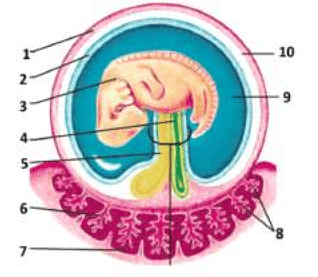
- Which of the following structures develops from the structure marked 4?
View More Questions
Top NEET PG Urinary System Questions
- In Wilson’s disease, there is less urinary excretion of:
- A female patient presented with recurrent Urinary tract infections. Imaging shows the following picture. What can be the most probable diagnosis?

- Laxative abuse causes which of the following renal stones ?
An elderly female presented with dribbling of urine only on coughing and straining. What type of urinary incontinence is she suffering from?
- Wolffian duct remnant in female is
View More Questions
Top NEET PG Questions
- A patient hailing from Delhi presents with fever, arthralgia, and extensive petechial rash for 3 days. Lab investigations revealed a hemoglobin of 9 g/ dL, a white blood cell count of 9000 cells/mm3, a platelet count of 20000 cells/mm3, and a prolonged bleeding time. The clotting time was normal. What is the most likely diagnosis?
- Which of the following statements is true about Trichomonas vaginalis?
- A lady from West Rajasthan presented with an ulcer surrounded by erythema on the right leg. Microscopy of the biopsy from the edge of the ulcer showed organisms with dark staining nuclei and kinetoplast. What is the most likely causative agent?
- A child presents with a fever and a rash. Urine examination showed cells with owl's eye appearance. What is the most likely diagnosis?
- Infection with Clonorchis sinensis is associated with an increased risk of__?
View More Questions