Question:
Which of the following is true about cardiac muscle?
Which of the following is true about cardiac muscle?
Show Hint
Recall where the nucleus sits in a cardiac myocyte versus a skeletal fibre.
Updated On: Jun 24, 2026
- Spindle shaped
- Large central nucleus
- No gap junctions
- Arranged in sheets
Show Solution

Verified By Collegedunia
The Correct Option is B
Solution and Explanation
Step 1: Cardiac muscle has distinctive features that separate it from both skeletal and smooth muscle.
Step 2: Cardiac myocytes are short, branching cylindrical cells, each typically with one (sometimes two) centrally placed nucleus. This matches the option of a large central nucleus.
Step 3: Why the others are wrong: spindle shaped describes smooth muscle, not cardiac. Cardiac muscle is rich in gap junctions within the intercalated discs, which allow rapid electrical coupling, so the no gap junctions option is false. Cardiac fibres branch and interconnect rather than being arranged in flat sheets.
Step 4: Therefore the correct statement is that cardiac muscle has a large central nucleus.
Step 2: Cardiac myocytes are short, branching cylindrical cells, each typically with one (sometimes two) centrally placed nucleus. This matches the option of a large central nucleus.
Step 3: Why the others are wrong: spindle shaped describes smooth muscle, not cardiac. Cardiac muscle is rich in gap junctions within the intercalated discs, which allow rapid electrical coupling, so the no gap junctions option is false. Cardiac fibres branch and interconnect rather than being arranged in flat sheets.
Step 4: Therefore the correct statement is that cardiac muscle has a large central nucleus.
Was this answer helpful?
0
0
Top NEET PG Anatomy Questions
- A defect in which of the following forms the structure marked below?

- A student had his jaw locked while yawning. Which of the following muscles is attached to the articular disc of the temporomandibular joint?
- The given histology image is of ?

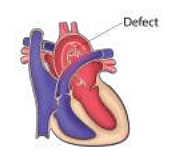
- A defect in which of the following aortic arches causes the defect shown in the image?
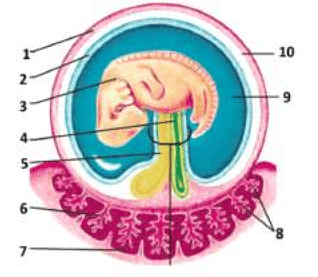
- Which of the following structures develops from the structure marked 4?
View More Questions
Top NEET PG Questions
- A patient hailing from Delhi presents with fever, arthralgia, and extensive petechial rash for 3 days. Lab investigations revealed a hemoglobin of 9 g/ dL, a white blood cell count of 9000 cells/mm3, a platelet count of 20000 cells/mm3, and a prolonged bleeding time. The clotting time was normal. What is the most likely diagnosis?
- Which of the following statements is true about Trichomonas vaginalis?
- A lady from West Rajasthan presented with an ulcer surrounded by erythema on the right leg. Microscopy of the biopsy from the edge of the ulcer showed organisms with dark staining nuclei and kinetoplast. What is the most likely causative agent?
- A child presents with a fever and a rash. Urine examination showed cells with owl's eye appearance. What is the most likely diagnosis?
- Infection with Clonorchis sinensis is associated with an increased risk of__?
View More Questions