Question:
The gene that regulates normal morphogenesis during development is
The gene that regulates normal morphogenesis during development is
Show Hint
Homeobox (Hox) genes are the master transcription factor genes that set up the body's anteroposterior pattern during development.
Updated On: Jul 8, 2026
- FMR-1 gene
- Homeobox gene
- P-16
- PTEN
Show Solution

Verified By Collegedunia
The Correct Option is B
Solution and Explanation
Step 1: Understanding the Question.
We need the gene family whose normal job is to control body shape and organ patterning as the embryo develops, that is, morphogenesis.
Step 2: Key Concept.
Homeobox genes, also called Hox genes, code for transcription factors that switch on the right combination of downstream genes in the right body segment at the right time. They set up the head to tail (anteroposterior) body plan and guide limb and organ patterning, so they directly regulate normal morphogenesis.
Step 3: Detailed Explanation.
FMR-1 is the familial mental retardation gene. Its abnormal expansion causes fragile X syndrome, which affects neuronal function and intellectual development, not general body patterning.
P-16 (CDKN2A) is a tumor suppressor gene that slows the cell cycle by inhibiting cyclin dependent kinases, protecting against cancer, not a morphogenesis regulator.
PTEN is also a tumor suppressor, a phosphatase that opposes the PI3K-AKT growth pathway, and its loss is linked with cancers of the breast, prostate and other organs, again a growth control gene rather than a body-plan gene.
Only homeobox genes are the master regulators of segmental body patterning during embryogenesis, and mutations in them classically cause patterning defects such as syndactyly or polydactyly.
Step 4: Final Answer.
The gene regulating normal morphogenesis during development is the homeobox gene, option (2).
We need the gene family whose normal job is to control body shape and organ patterning as the embryo develops, that is, morphogenesis.
Step 2: Key Concept.
Homeobox genes, also called Hox genes, code for transcription factors that switch on the right combination of downstream genes in the right body segment at the right time. They set up the head to tail (anteroposterior) body plan and guide limb and organ patterning, so they directly regulate normal morphogenesis.
Step 3: Detailed Explanation.
FMR-1 is the familial mental retardation gene. Its abnormal expansion causes fragile X syndrome, which affects neuronal function and intellectual development, not general body patterning.
P-16 (CDKN2A) is a tumor suppressor gene that slows the cell cycle by inhibiting cyclin dependent kinases, protecting against cancer, not a morphogenesis regulator.
PTEN is also a tumor suppressor, a phosphatase that opposes the PI3K-AKT growth pathway, and its loss is linked with cancers of the breast, prostate and other organs, again a growth control gene rather than a body-plan gene.
Only homeobox genes are the master regulators of segmental body patterning during embryogenesis, and mutations in them classically cause patterning defects such as syndactyly or polydactyly.
Step 4: Final Answer.
The gene regulating normal morphogenesis during development is the homeobox gene, option (2).
Was this answer helpful?
0
0
Top NEET PG Anatomy Questions
- A defect in which of the following forms the structure marked below?

- A student had his jaw locked while yawning. Which of the following muscles is attached to the articular disc of the temporomandibular joint?
- The given histology image is of ?

- A defect in which of the following aortic arches causes the defect shown in the image?
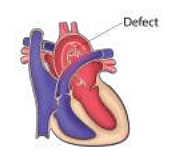
- Which of the following structures develops from the structure marked 4?
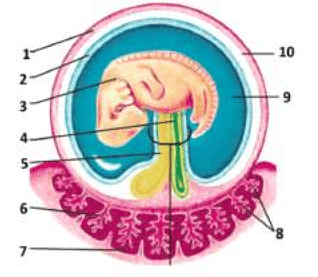
View More Questions
Top NEET PG Questions
- A patient hailing from Delhi presents with fever, arthralgia, and extensive petechial rash for 3 days. Lab investigations revealed a hemoglobin of 9 g/ dL, a white blood cell count of 9000 cells/mm3, a platelet count of 20000 cells/mm3, and a prolonged bleeding time. The clotting time was normal. What is the most likely diagnosis?
- Which of the following statements is true about Trichomonas vaginalis?
- A lady from West Rajasthan presented with an ulcer surrounded by erythema on the right leg. Microscopy of the biopsy from the edge of the ulcer showed organisms with dark staining nuclei and kinetoplast. What is the most likely causative agent?
- A child presents with a fever and a rash. Urine examination showed cells with owl's eye appearance. What is the most likely diagnosis?
- Infection with Clonorchis sinensis is associated with an increased risk of__?
View More Questions