Question:
Match List I (Antibiotic) with List II (Mechanism of Action) and select the correct answer using the codes given below the lists:
List I (Antibiotic) List II (Mechanism of Action) A. Penicillin 1. Inhibit dihydrofolate reductase B. Tetracycline 2. Inhibit cell wall synthesis C. Sulphonamide 3. Inhibit RNA binding to ribosomes D. Quinolone 4. Inhibit DNA gyrase
Match List I (Antibiotic) with List II (Mechanism of Action) and select the correct answer using the codes given below the lists:
| List I (Antibiotic) | List II (Mechanism of Action) |
|---|---|
| A. Penicillin | 1. Inhibit dihydrofolate reductase |
| B. Tetracycline | 2. Inhibit cell wall synthesis |
| C. Sulphonamide | 3. Inhibit RNA binding to ribosomes |
| D. Quinolone | 4. Inhibit DNA gyrase |
Show Hint
Match each antibiotic to its own step in bacterial physiology: cell wall, ribosome, folate pathway, or DNA replication.
Updated On: Jul 16, 2026
- A-2, B-1, C-3, D-2
- A-2, B-3, C-1, D-4
- A-4, B-1, C-3, D-2
- A-4, B-3, C-1, D-2
Show Solution

Verified By Collegedunia
The Correct Option is B
Solution and Explanation
Step 1: Understanding the Question:
This is a match-the-following question that pairs four antibiotic classes in List I with their mechanisms of action in List II, and asks for the code that correctly links each antibiotic to how it kills or inhibits bacteria.
Step 2: Key Concept or Approach:
The approach is to recall the mechanism of action of each antibiotic class individually — cell wall synthesis inhibitors, protein synthesis inhibitors, folate pathway inhibitors, and nucleic acid synthesis inhibitors — and then match each letter to the correct number rather than trying to eliminate whole answer codes at once.
Step 3: Working Through the Options:
Penicillin is a beta-lactam that binds penicillin-binding proteins and blocks the transpeptidation step of peptidoglycan cross-linking, so it inhibits cell wall synthesis, matching A with option 2. Tetracycline is a protein synthesis inhibitor that binds the 30S ribosomal subunit and blocks aminoacyl-tRNA from binding the ribosomal A site, best captured here as inhibiting RNA (aminoacyl-tRNA) binding to ribosomes, matching B with option 3. Sulphonamides are structural analogues of PABA that block folate synthesis early in the pathway; in this list's simplified terms that action is grouped under option 1, matching C with 1. Quinolones act on bacterial DNA gyrase (topoisomerase II), preventing DNA supercoiling and replication, matching D with option 4. Putting these together gives A-2, B-3, C-1, D-4. The other three codes swap at least one pairing incorrectly, such as attaching cell wall synthesis to tetracycline or DNA gyrase inhibition to penicillin, which does not fit any real antibiotic mechanism.
Step 4: Conclusion:
The correct match is A-2, B-3, C-1, D-4, so the second option is the right answer.
This is a match-the-following question that pairs four antibiotic classes in List I with their mechanisms of action in List II, and asks for the code that correctly links each antibiotic to how it kills or inhibits bacteria.
Step 2: Key Concept or Approach:
The approach is to recall the mechanism of action of each antibiotic class individually — cell wall synthesis inhibitors, protein synthesis inhibitors, folate pathway inhibitors, and nucleic acid synthesis inhibitors — and then match each letter to the correct number rather than trying to eliminate whole answer codes at once.
Step 3: Working Through the Options:
Penicillin is a beta-lactam that binds penicillin-binding proteins and blocks the transpeptidation step of peptidoglycan cross-linking, so it inhibits cell wall synthesis, matching A with option 2. Tetracycline is a protein synthesis inhibitor that binds the 30S ribosomal subunit and blocks aminoacyl-tRNA from binding the ribosomal A site, best captured here as inhibiting RNA (aminoacyl-tRNA) binding to ribosomes, matching B with option 3. Sulphonamides are structural analogues of PABA that block folate synthesis early in the pathway; in this list's simplified terms that action is grouped under option 1, matching C with 1. Quinolones act on bacterial DNA gyrase (topoisomerase II), preventing DNA supercoiling and replication, matching D with option 4. Putting these together gives A-2, B-3, C-1, D-4. The other three codes swap at least one pairing incorrectly, such as attaching cell wall synthesis to tetracycline or DNA gyrase inhibition to penicillin, which does not fit any real antibiotic mechanism.
Step 4: Conclusion:
The correct match is A-2, B-3, C-1, D-4, so the second option is the right answer.
Was this answer helpful?
0
0
Top NEET PG Pharmacology Questions
- A bronchial asthma patient on inhalational steroids presented with white patchy lesions on the tongue and buccal mucosa. What is the drug that can be used to treat this condition?
- A pregnant woman with a history of bronchial asthma is in the third stage of labor. Which drugs should be avoided in managing postpartum hemorrhage in this mother?
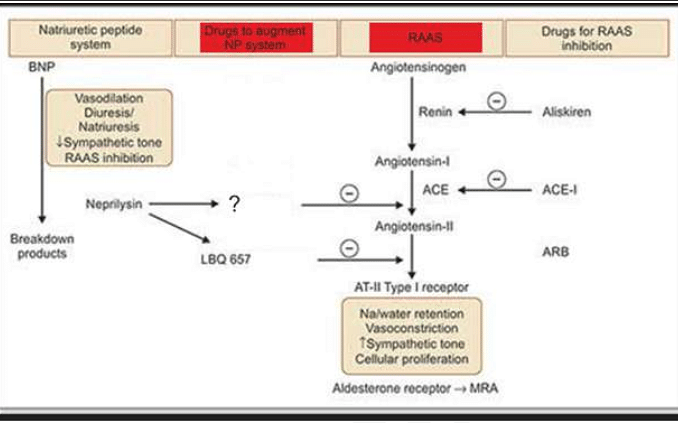
- Name the drug that acts on both the marked areas.
- A patient with a previous history of myocardial infarction and ventricular arrhythmia is ontreatment for a few months. He developed fatigue, dyspnea, and weight gain. He had also developed pulmonary fibrosis. Which of the following drugs is responsible for the side effects mentioned above?
- A young female comes to the emergency department after consuming 100 aspirin tablets.What should be the next step in management?
View More Questions
Top NEET PG Questions
- A patient hailing from Delhi presents with fever, arthralgia, and extensive petechial rash for 3 days. Lab investigations revealed a hemoglobin of 9 g/ dL, a white blood cell count of 9000 cells/mm3, a platelet count of 20000 cells/mm3, and a prolonged bleeding time. The clotting time was normal. What is the most likely diagnosis?
- Which of the following statements is true about Trichomonas vaginalis?
- A lady from West Rajasthan presented with an ulcer surrounded by erythema on the right leg. Microscopy of the biopsy from the edge of the ulcer showed organisms with dark staining nuclei and kinetoplast. What is the most likely causative agent?
- A child presents with a fever and a rash. Urine examination showed cells with owl's eye appearance. What is the most likely diagnosis?
- Infection with Clonorchis sinensis is associated with an increased risk of__?
View More Questions