Question:
Lines of Blaschko are:
Lines of Blaschko are:
Show Hint
They trace embryonic skin cell migration, not nerves or vessels.
Updated On: Jun 24, 2026
- Lymphatics
- Blood vessels
- Nerves
- Lines of development
Show Solution

Verified By Collegedunia
The Correct Option is D
Solution and Explanation
Step 1: Lines of Blaschko are invisible patterns on the skin that follow the routes taken by epidermal cells (keratinocytes and melanocytes) as they migrate and proliferate during embryonic development.
Step 2: They form a V or fountain shape over the back, S or whorled patterns on the abdomen and flanks, and linear streaks down the limbs.
Step 3: They do not correspond to dermatomes (nerves), to the course of blood vessels, or to lymphatic drainage. This distinguishes them from Langer lines and from dermatomal patterns.
Step 4: They become apparent only in disease, when a mosaic or X-linked skin disorder (such as incontinentia pigmenti, epidermal naevi, or lichen striatus) lays down lesions along these developmental tracks.
Step 5: Hence the lines of Blaschko represent embryonic lines of skin development (lines of cutaneous cell migration).
Conclusion: Lines of Blaschko are lines of development (option 4).
Step 2: They form a V or fountain shape over the back, S or whorled patterns on the abdomen and flanks, and linear streaks down the limbs.
Step 3: They do not correspond to dermatomes (nerves), to the course of blood vessels, or to lymphatic drainage. This distinguishes them from Langer lines and from dermatomal patterns.
Step 4: They become apparent only in disease, when a mosaic or X-linked skin disorder (such as incontinentia pigmenti, epidermal naevi, or lichen striatus) lays down lesions along these developmental tracks.
Step 5: Hence the lines of Blaschko represent embryonic lines of skin development (lines of cutaneous cell migration).
Conclusion: Lines of Blaschko are lines of development (option 4).
Was this answer helpful?
0
0
Top NEET PG Anatomy Questions
- A defect in which of the following forms the structure marked below?

- A student had his jaw locked while yawning. Which of the following muscles is attached to the articular disc of the temporomandibular joint?
- The given histology image is of ?

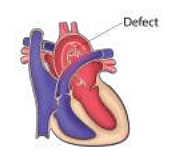
- A defect in which of the following aortic arches causes the defect shown in the image?
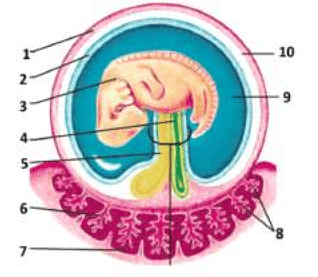
- Which of the following structures develops from the structure marked 4?
View More Questions
Top NEET PG Questions
- A patient hailing from Delhi presents with fever, arthralgia, and extensive petechial rash for 3 days. Lab investigations revealed a hemoglobin of 9 g/ dL, a white blood cell count of 9000 cells/mm3, a platelet count of 20000 cells/mm3, and a prolonged bleeding time. The clotting time was normal. What is the most likely diagnosis?
- Which of the following statements is true about Trichomonas vaginalis?
- A lady from West Rajasthan presented with an ulcer surrounded by erythema on the right leg. Microscopy of the biopsy from the edge of the ulcer showed organisms with dark staining nuclei and kinetoplast. What is the most likely causative agent?
- A child presents with a fever and a rash. Urine examination showed cells with owl's eye appearance. What is the most likely diagnosis?
- Infection with Clonorchis sinensis is associated with an increased risk of__?
View More Questions