Question:
In a motor vehicle accident, the use of a seat belt is expected to result in all of the following EXCEPT
In a motor vehicle accident, the use of a seat belt is expected to result in all of the following EXCEPT
Show Hint
Three of these are textbook parts of "seat belt syndrome" - one involves structures the belt's force doesn't really reach.
Updated On: Jul 16, 2026
- Reduced incidence of severe thoracic injury
- Occurrence of small intestine and mesenteric injury
- Increased severity of decelerating head injury
- Trauma to major intra-abdominal vessels
Show Solution

Verified By Collegedunia
The Correct Option is D
Solution and Explanation
Step 1: Understanding the Question:
This question is about the recognised pattern of injuries caused by wearing a seat belt in a road traffic accident, often called "seat belt syndrome", and asks which of the listed effects is NOT a typical part of that pattern.
Step 2: Key Concept or Approach:
A seat belt changes the distribution of crash forces on the body. It reduces the chance of being thrown into the windscreen or steering wheel (protecting the chest), but it concentrates compressive force across the abdomen and can produce a sudden forward-flexion jolt at the head and neck, since the torso is held back while the head is not.
Step 3: Working Through the Options:
A reduced incidence of severe thoracic injury is expected, because the belt prevents the chest from striking the steering wheel or dashboard. Small intestine and mesenteric injury is the classic "seat belt syndrome" finding, caused by the lap belt compressing bowel loops against the spine. Increased severity of decelerating head injury is also a recognised effect - because the torso is restrained while the head keeps moving forward, the head and neck experience an exaggerated flexion-deceleration force, a well documented seat belt-related injury pattern. Trauma to major intra-abdominal vessels (the aorta, vena cava, or iliac vessels), however, is not the classic seat belt injury - the belt's compressive force is concentrated on the bowel, mesentery and lumbar spine, not on the deep major vessels, so this is the effect that is NOT typically expected.
Step 4: Conclusion:
Trauma to major intra-abdominal vessels is the option that is not an expected effect of seat belt use.
This question is about the recognised pattern of injuries caused by wearing a seat belt in a road traffic accident, often called "seat belt syndrome", and asks which of the listed effects is NOT a typical part of that pattern.
Step 2: Key Concept or Approach:
A seat belt changes the distribution of crash forces on the body. It reduces the chance of being thrown into the windscreen or steering wheel (protecting the chest), but it concentrates compressive force across the abdomen and can produce a sudden forward-flexion jolt at the head and neck, since the torso is held back while the head is not.
Step 3: Working Through the Options:
A reduced incidence of severe thoracic injury is expected, because the belt prevents the chest from striking the steering wheel or dashboard. Small intestine and mesenteric injury is the classic "seat belt syndrome" finding, caused by the lap belt compressing bowel loops against the spine. Increased severity of decelerating head injury is also a recognised effect - because the torso is restrained while the head keeps moving forward, the head and neck experience an exaggerated flexion-deceleration force, a well documented seat belt-related injury pattern. Trauma to major intra-abdominal vessels (the aorta, vena cava, or iliac vessels), however, is not the classic seat belt injury - the belt's compressive force is concentrated on the bowel, mesentery and lumbar spine, not on the deep major vessels, so this is the effect that is NOT typically expected.
Step 4: Conclusion:
Trauma to major intra-abdominal vessels is the option that is not an expected effect of seat belt use.
Was this answer helpful?
0
0
Top NEET PG Surgery Questions
- A 55-year-old male presented with verrucous carcinoma around the glans of the penis. Examination reveals that the inguinal lymph nodes are not enlarged. What is the appropriate management for this patient?
- Identify the procedure being performed in the image given below.
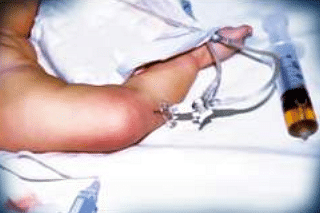
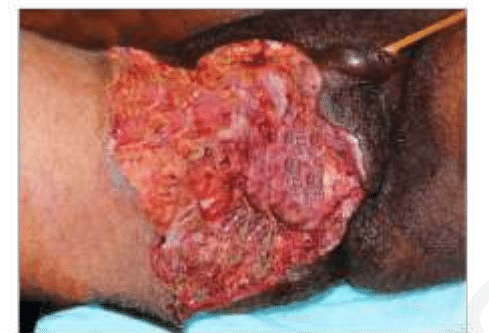
- A diabetic patient presents with sudden-onset perineal pain. On examination, foul-smelling discharge, and necrotic tissue as seen in the image is noted. Which of the following is true about the given condition?
- Which of the following is the most common complication following ligation of the first vessel during abdominoperineal resection for rectal carcinoma?(APR Abdominoperineal resection)
- A patient presents to the clinic with the lesion given in the image. He had a traumatic injury to the chest one year ago. What is the most likely diagnosis?
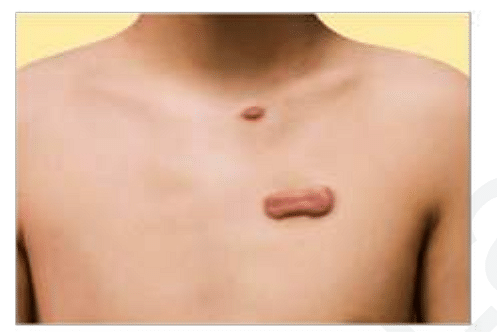
View More Questions
Top NEET PG Questions
- A patient hailing from Delhi presents with fever, arthralgia, and extensive petechial rash for 3 days. Lab investigations revealed a hemoglobin of 9 g/ dL, a white blood cell count of 9000 cells/mm3, a platelet count of 20000 cells/mm3, and a prolonged bleeding time. The clotting time was normal. What is the most likely diagnosis?
- Which of the following statements is true about Trichomonas vaginalis?
- A lady from West Rajasthan presented with an ulcer surrounded by erythema on the right leg. Microscopy of the biopsy from the edge of the ulcer showed organisms with dark staining nuclei and kinetoplast. What is the most likely causative agent?
- A child presents with a fever and a rash. Urine examination showed cells with owl's eye appearance. What is the most likely diagnosis?
- Infection with Clonorchis sinensis is associated with an increased risk of__?
View More Questions