Question:
During TURP, the surgeon takes care to dissect above the verumontanum so as to prevent injury to which structure?
During TURP, the surgeon takes care to dissect above the verumontanum so as to prevent injury to which structure?
Show Hint
The continence-preserving sphincter sits just distal to the verumontanum, so resection stays proximal to it.
Updated On: Jun 24, 2026
- External urethral sphincter
- Urethral crest
- Prostatic utricle
- Trigone of bladder
Show Solution

Verified By Collegedunia
The Correct Option is A
Solution and Explanation
Step 1: Recall the anatomy of the verumontanum (colliculus seminalis). It is a prominence on the posterior wall of the prostatic urethra and is a critical surgical landmark during transurethral resection of the prostate (TURP).
Step 2: Understand the relationship of the external urethral sphincter (rhabdosphincter). The external (distal) urethral sphincter lies just distal to the verumontanum, in the membranous urethra. It is responsible for maintaining urinary continence.
Step 3: Apply this to the resection. During TURP the surgeon must stop resecting at the verumontanum and keep the resection proximal (above) to it; resecting distal to the verumontanum risks damaging the external sphincter and causing urinary incontinence.
Step 4: Therefore, dissecting above (proximal to) the verumontanum protects the external urethral sphincter. The urethral crest, prostatic utricle and bladder trigone are not the structures protected by this manoeuvre.
Answer: A (External urethral sphincter).
Step 2: Understand the relationship of the external urethral sphincter (rhabdosphincter). The external (distal) urethral sphincter lies just distal to the verumontanum, in the membranous urethra. It is responsible for maintaining urinary continence.
Step 3: Apply this to the resection. During TURP the surgeon must stop resecting at the verumontanum and keep the resection proximal (above) to it; resecting distal to the verumontanum risks damaging the external sphincter and causing urinary incontinence.
Step 4: Therefore, dissecting above (proximal to) the verumontanum protects the external urethral sphincter. The urethral crest, prostatic utricle and bladder trigone are not the structures protected by this manoeuvre.
Answer: A (External urethral sphincter).
Was this answer helpful?
0
0
Top NEET PG Surgery Questions
- A 55-year-old male presented with verrucous carcinoma around the glans of the penis. Examination reveals that the inguinal lymph nodes are not enlarged. What is the appropriate management for this patient?
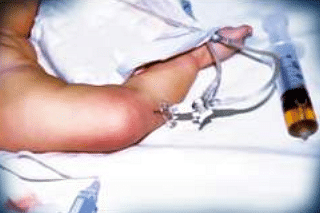
- Identify the procedure being performed in the image given below.
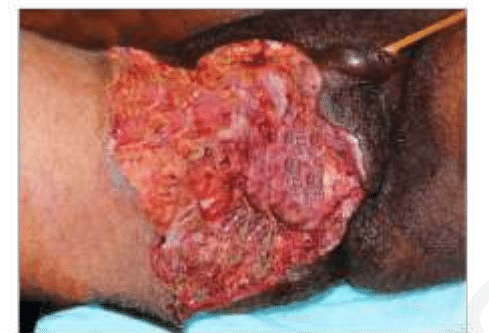
- A diabetic patient presents with sudden-onset perineal pain. On examination, foul-smelling discharge, and necrotic tissue as seen in the image is noted. Which of the following is true about the given condition?
- Which of the following is the most common complication following ligation of the first vessel during abdominoperineal resection for rectal carcinoma?(APR Abdominoperineal resection)
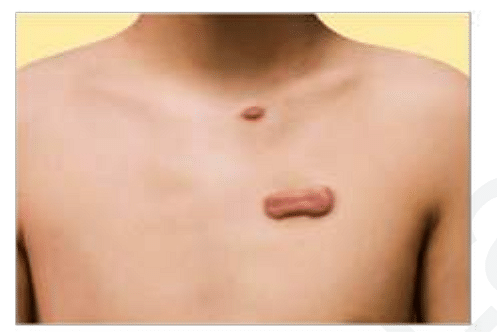
- A patient presents to the clinic with the lesion given in the image. He had a traumatic injury to the chest one year ago. What is the most likely diagnosis?
View More Questions
Top NEET PG Neuroanatomy Questions
- A patient was brought to the ER following a road traffic accident. On examination, the patient opens his eyes to a painful stimulus, speaks inappropriately, and withdraws his limbs to a painful stimulus. What is his GCS score?
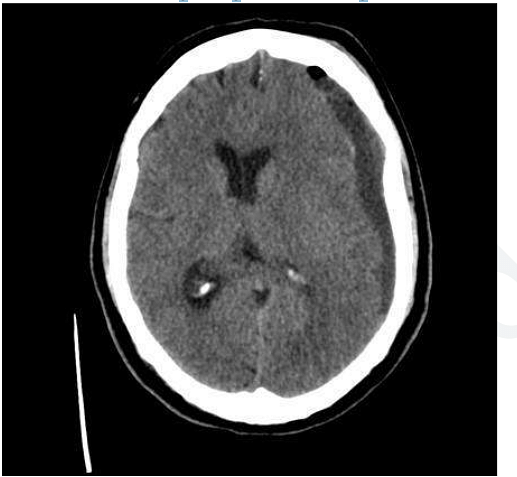
- A 50-year-old patient with a history of trauma one week back presents with confusion and ataxia. He is on treatment for alcohol dependence and his last intake was 2 weeks back. CT scan reveals the following finding. What is the diagnosis?
- A patient comes to the casualty with a severe headache. His BP was found to be 160/100mmHg. CT scan revealed a subarachnoid hemorrhage. What is the next best step in the management of this patient?
Top NEET PG Questions
- A patient hailing from Delhi presents with fever, arthralgia, and extensive petechial rash for 3 days. Lab investigations revealed a hemoglobin of 9 g/ dL, a white blood cell count of 9000 cells/mm3, a platelet count of 20000 cells/mm3, and a prolonged bleeding time. The clotting time was normal. What is the most likely diagnosis?
- Which of the following statements is true about Trichomonas vaginalis?
- A lady from West Rajasthan presented with an ulcer surrounded by erythema on the right leg. Microscopy of the biopsy from the edge of the ulcer showed organisms with dark staining nuclei and kinetoplast. What is the most likely causative agent?
- A child presents with a fever and a rash. Urine examination showed cells with owl's eye appearance. What is the most likely diagnosis?
- Infection with Clonorchis sinensis is associated with an increased risk of__?
View More Questions