Stability of alkenes increases with hyperconjugation (more $\alpha\text{H}$). Among isomers with the same degree of substitution, $\text{trans}$ is more stable than $\text{cis}$ due to lower steric hindrance.
The stability of alkenes is generally determined by the number of $\alpha$-hydrogens ($\alpha\text{H}$) (hyperconjugation) and minimized steric repulsion ($\text{trans}$ $>$ $\text{cis}$). $\text{A} (1-\text{Butene})$: $2 \alpha\text{H}$ (Monosubstituted). $\text{B} (\text{cis}-2-\text{Butene})$: $6 \alpha\text{H}$ ($\text{cis}$). $\text{C} (\text{trans}-2-\text{Butene})$: $6 \alpha\text{H}$ ($\text{trans}$). $\text{D} (\text{isobutene})$: $6 \alpha\text{H}$ (Di-substituted terminal). Standard stability order: $\text{A}>\text{D}>\text{C}>\text{B}$. (Di-substituted is more stable than Mono-substituted).


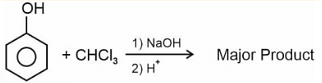
 is _________ type of an organic compound.