Best time to do quadruple test
- 8-12 weeks
- 11-15 weeks
- 15-20 weeks
- 18-22 weeks

The Correct Option is C
Solution and Explanation
In the field of Gynaecology and Obstetrics, prenatal screening tests play a crucial role in assessing the health of a developing fetus. The quadruple test, often called the quad screen, is one such important screening test. It measures four substances in a pregnant woman's blood: alpha-fetoprotein (AFP), human chorionic gonadotropin (hCG), estriol, and inhibin A. These markers help identify the risk of certain birth defects, such as Down syndrome and neural tube defects.
During a typical pregnancy, the levels of these substances change at different stages. Therefore, for the quadruple test to provide accurate and useful results, it must be conducted during the optimal time frame.
The recommended period for conducting the quadruple test is between 15-20 weeks of gestation. Testing during this window allows clinicians to obtain the most reliable results, giving expecting parents and healthcare providers the opportunity to make informed decisions about further diagnostic testing or interventions, if necessary.
Top NEET PG Gynaecology and Obstetrics Questions
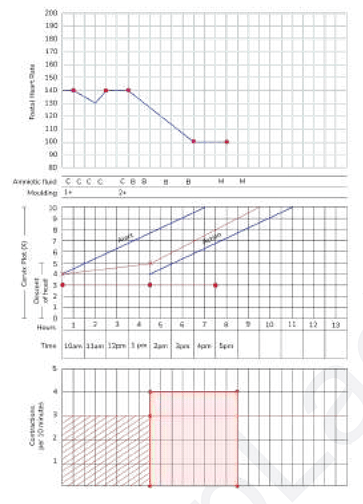
- A partogram of a woman who is in labor is shown below. Oxytocin infusion is already given. How will you manage the condition?
- A woman presents to you at 36 weeks of gestation with complaints of breathlessness and excessive abdominal distension. Fetal movements are normal. On examination, fetal parts are not easily felt and fetal heartbeat is heard but it is muffled. Her symphysis fundal height is 41 cm. Her abdomen is tense but not tender. What is the most likely diagonosis?
- For which of the following procedures in the given OT list, can you preferably do a hysteroscopy ?
- A primigravida presents to you with anemia early in her pregnancy. She is 7 weeks pregnant as seen on ultrasound. Her hemoglobin level is 9 g/dL. When should the iron supplements be started for her?
- A 23-year-old woman accompanied by her mother-in-law comes to the infertility clinic. She has been having regular intercourse for 6 months but is not able to conceive. What is the next best step?
Top NEET PG Role of Hormones in Initiating Reproductive Function Questions
- Anesthesia of choice for cesarean section in severe pre-eclampsia :
- Order of ligation of devascularization in PPH
- Pregnant female with herpetic lesions in the vulva. Management is?
- Patient with infraumbilical flattening & fetal heart rate heard laterally, what is the presentation?
- A pregnant lady with 34 weeks of amenorrhea has the following findings: LDH- 700 IU/L, platelets – 75,000/mm3, serum bilirubin- 1.5mg/dL, SGOT-200 U/L, SGPT-150U/L, and BP -140/96 mm Hg. Her coagulation profile and renal function tests are normal. What is the diagnosis?
LDH- Lactate dehydrogenase
SGOT- Serum glutamic-oxaloacetic transaminase / AST- Asparate transaminase
SGPT- Serum glutamic pyruvic transaminase / ALT- Alanine transaminase
Top NEET PG Questions
- A patient hailing from Delhi presents with fever, arthralgia, and extensive petechial rash for 3 days. Lab investigations revealed a hemoglobin of 9 g/ dL, a white blood cell count of 9000 cells/mm3, a platelet count of 20000 cells/mm3, and a prolonged bleeding time. The clotting time was normal. What is the most likely diagnosis?
- Which of the following statements is true about Trichomonas vaginalis?
- A lady from West Rajasthan presented with an ulcer surrounded by erythema on the right leg. Microscopy of the biopsy from the edge of the ulcer showed organisms with dark staining nuclei and kinetoplast. What is the most likely causative agent?
- A child presents with a fever and a rash. Urine examination showed cells with owl's eye appearance. What is the most likely diagnosis?
- Infection with Clonorchis sinensis is associated with an increased risk of__?