Question:
Alcoholic gait, nystagmus after RTA (road traffic accident) — which lobe of the cerebellum is affected?
Alcoholic gait, nystagmus after RTA (road traffic accident) — which lobe of the cerebellum is affected?
Show Hint
Which cerebellar lobe is the vestibulocerebellum, controlling both balance/equilibrium AND eye movements (nystagmus)?
Updated On: Aug 27, 2026
- Flocculonodular
- Dentate
- Anterior lobe
- Vermis
Show Solution

Verified By Collegedunia
The Correct Option is A
Solution and Explanation
Step 1: Recall the functional divisions of the cerebellum.
The cerebellum is divided into: the flocculonodular lobe (vestibulocerebellum) - controls balance/equilibrium and eye movements; the anterior lobe / vermis (spinocerebellum) - controls posture, gait and trunk/limb coordination; and the lateral hemispheres (cerebrocerebellum) - plan skilled, learned movements. The dentate is a deep nucleus, not a lobe.
Step 2: Match the two clinical signs to a region.
The patient has BOTH a wide-based ataxic ("alcoholic"/drunken) gait AND nystagmus. Nystagmus is the key localising sign: abnormal eye movements and disturbed equilibrium point specifically to the flocculonodular lobe (vestibulocerebellum), which links the cerebellum with the vestibular system controlling balance and gaze. Combined with truncal/gait instability, the flocculonodular lobe best explains both features together.
Step 3: Eliminate the distractors.
(B) Dentate nucleus is a deep cerebellar nucleus (not a "lobe") and lesions cause limb dysmetria/intention tremor, not prominent nystagmus. (C) Anterior lobe damage (classic in chronic alcoholics) gives gait/trunk ataxia but is not the lobe most associated with nystagmus. (D) Vermis lesions cause truncal ataxia and a broad-based gait but, again, nystagmus is the hallmark of the flocculonodular/vestibulocerebellar region. Because the question pairs gait disturbance WITH nystagmus, the flocculonodular lobe is the best single answer.
Final answer: A - Flocculonodular lobe.
The cerebellum is divided into: the flocculonodular lobe (vestibulocerebellum) - controls balance/equilibrium and eye movements; the anterior lobe / vermis (spinocerebellum) - controls posture, gait and trunk/limb coordination; and the lateral hemispheres (cerebrocerebellum) - plan skilled, learned movements. The dentate is a deep nucleus, not a lobe.
Step 2: Match the two clinical signs to a region.
The patient has BOTH a wide-based ataxic ("alcoholic"/drunken) gait AND nystagmus. Nystagmus is the key localising sign: abnormal eye movements and disturbed equilibrium point specifically to the flocculonodular lobe (vestibulocerebellum), which links the cerebellum with the vestibular system controlling balance and gaze. Combined with truncal/gait instability, the flocculonodular lobe best explains both features together.
Step 3: Eliminate the distractors.
(B) Dentate nucleus is a deep cerebellar nucleus (not a "lobe") and lesions cause limb dysmetria/intention tremor, not prominent nystagmus. (C) Anterior lobe damage (classic in chronic alcoholics) gives gait/trunk ataxia but is not the lobe most associated with nystagmus. (D) Vermis lesions cause truncal ataxia and a broad-based gait but, again, nystagmus is the hallmark of the flocculonodular/vestibulocerebellar region. Because the question pairs gait disturbance WITH nystagmus, the flocculonodular lobe is the best single answer.
Final answer: A - Flocculonodular lobe.
Was this answer helpful?
0
0
Top NEET PG Anatomy Questions
- A defect in which of the following forms the structure marked below?

- A student had his jaw locked while yawning. Which of the following muscles is attached to the articular disc of the temporomandibular joint?
- The given histology image is of ?

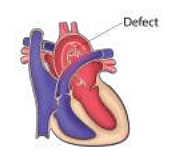
- A defect in which of the following aortic arches causes the defect shown in the image?
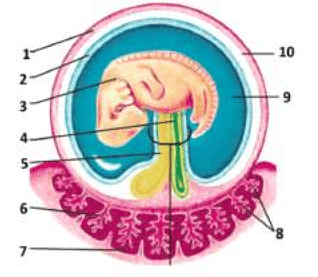
- Which of the following structures develops from the structure marked 4?
View More Questions
Top NEET PG Cerebellar functional anatomy — flocculonodular lobe Questions
Top NEET PG Questions
- A patient hailing from Delhi presents with fever, arthralgia, and extensive petechial rash for 3 days. Lab investigations revealed a hemoglobin of 9 g/ dL, a white blood cell count of 9000 cells/mm3, a platelet count of 20000 cells/mm3, and a prolonged bleeding time. The clotting time was normal. What is the most likely diagnosis?
- Which of the following statements is true about Trichomonas vaginalis?
- A lady from West Rajasthan presented with an ulcer surrounded by erythema on the right leg. Microscopy of the biopsy from the edge of the ulcer showed organisms with dark staining nuclei and kinetoplast. What is the most likely causative agent?
- A child presents with a fever and a rash. Urine examination showed cells with owl's eye appearance. What is the most likely diagnosis?
- Infection with Clonorchis sinensis is associated with an increased risk of__?
View More Questions