A patient comes with abdominal pain, jaundice, and portal hypertension. Anastomosis between which of the following veins is seen?
- Left colic vein and middle colic veins
- Esophageal veins and left gastric veins
- Superior rectal and phrenic veins
- Sigmoid and superior rectal veins

The Correct Option is B
Solution and Explanation
The condition described involves a combination of symptoms: abdominal pain, jaundice, and portal hypertension. These manifestations suggest an underlying issue with the liver's blood supply, often leading to portal hypertension. Portal hypertension is a condition characterized by increased blood pressure within the portal venous system, often due to liver cirrhosis or other forms of hepatic dysfunction.
One common result of portal hypertension is the development of portosystemic venous anastomoses, where blood finds alternative pathways due to increased resistance in the liver's blood vessels. These anastomoses occur between veins of the portal circulation and those of the systemic circulation, allowing blood to bypass the liver.
A commonly affected site is between the esophageal veins, which are part of the systemic circulation, and the left gastric veins, belonging to the portal circulation. This connection can lead to esophageal varices, which are dilated veins in the esophagus and a known complication of portal hypertension.
Given these particulars, the correct answer is:
- Esophageal veins and left gastric veins
Top NEET PG Anatomy Questions
- A defect in which of the following forms the structure marked below?

- A student had his jaw locked while yawning. Which of the following muscles is attached to the articular disc of the temporomandibular joint?
- The given histology image is of ?

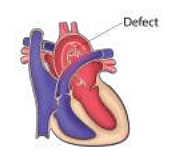
- A defect in which of the following aortic arches causes the defect shown in the image?
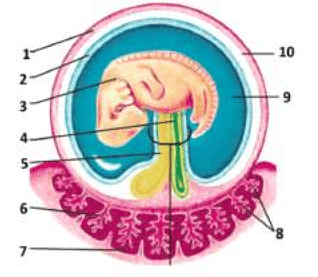
- Which of the following structures develops from the structure marked 4?
Top NEET PG Gastrointestinal tract Questions
Top NEET PG Questions
- A patient hailing from Delhi presents with fever, arthralgia, and extensive petechial rash for 3 days. Lab investigations revealed a hemoglobin of 9 g/ dL, a white blood cell count of 9000 cells/mm3, a platelet count of 20000 cells/mm3, and a prolonged bleeding time. The clotting time was normal. What is the most likely diagnosis?
- Which of the following statements is true about Trichomonas vaginalis?
- A lady from West Rajasthan presented with an ulcer surrounded by erythema on the right leg. Microscopy of the biopsy from the edge of the ulcer showed organisms with dark staining nuclei and kinetoplast. What is the most likely causative agent?
- A child presents with a fever and a rash. Urine examination showed cells with owl's eye appearance. What is the most likely diagnosis?
- Infection with Clonorchis sinensis is associated with an increased risk of__?