Question:
A patient came to the medical OPD with complaints of polyuria. He has a history of undergoing total hypophysectomy. His Na+ levels are found to be 155 mEq/ L, urine osmolarity was 200 mOsm/L. What is the definitive management in this patient?
A patient came to the medical OPD with complaints of polyuria. He has a history of undergoing total hypophysectomy. His Na+ levels are found to be 155 mEq/ L, urine osmolarity was 200 mOsm/L. What is the definitive management in this patient?
Updated On: Aug 27, 2026
DDAVP for 2 weeks and then discontinue
DDAVP supplementation for lifelong
Upsetting of receptors so no treatment is required
Thiazides for 2 weeks
Show Solution

Verified By Collegedunia
The Correct Option is B
Solution and Explanation
The patient exhibits symptoms indicative of diabetes insipidus, characterized by polyuria and hypernatremia (Na+ levels at 155 mEq/L) with low urine osmolarity (200 mOsm/L). This condition is commonly seen post-hypophysectomy due to a deficiency in antidiuretic hormone (ADH) production, also known as vasopressin. In such cases, the treatment focuses on replacing the missing hormone to manage the high urine output and correct serum sodium levels.
The appropriate treatment is Desmopressin (DDAVP), a synthetic analogue of vasopressin, administered to provide continuous replacement of the absent ADH. This approach prevents dehydration and normalizes urine concentration and serum sodium levels.
Conclusion: Given the permanent nature of ADH deficiency post hypophysectomy, the patient requires DDAVP supplementation for lifelong to maintain homeostasis.
Was this answer helpful?
0
0
Top NEET PG Medicine Questions
- Identify the condition associated with the murmur in the image below

- A young man came to the medical OPD with complaints of early morning backache and stiffness, which improves on exercise, and persistent red eyes. On examination, lung expansion was less than 3 cm. X-ray is shown in the image given below.

What is the most probable diagnosis? - A patient with hyperkalemia and elevated urea levels underwent dialysis. Towards the end of the session, she became drowsy and had a sudden seizure episode. On examination, thepatient was hypotensive. What is the treatment for this condition?
- A female patient presents to the emergency department with severe restlessness, palpitations, and tremors. She is a known case of bronchial asthma. On examination, the neck looksswollen. Blood pressure is elevated, and tachycardia is noted. ECG shows atrial fibrillation.Which of the following drugs is used for immediate management in this patient?
- A 30-year-old male is found to be positive for HBsAg and HBeAg and is diagnosed with chronic hepatitis B. The patient’s viral load was 2x 100000 and SGPT is found to be doubled. What is the appropriate management in this patient? SGPT-Serum glutamate pyruvate transaminase
View More Questions
Top NEET PG Neuroanatomy Questions
- A patient is brought to the OPD by his wife, complaining about difficulty expressing emotionsand not participating in daily activities. On examination, resting tremors and rigidity are noted.Given the possible diagnosis, which part of the brain is affected in this patient?
- A male patient presented to the emergency room with seizures. He has a history of fever, headache, and confusion. An MRI brain was done, and it showed inflammation involving the bitemporal lobe. What is the most likely aetiology for this presentation?
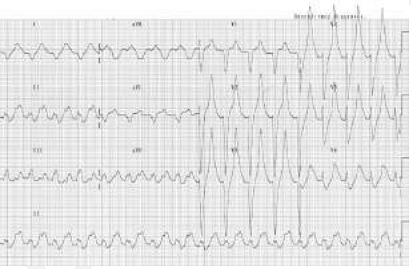
- A patient who is a known case of hypertension on multiple anti-hypertensive medications came to OPD. His ECG finding is given below. Which of the following drugs is responsible for the ECG finding?
- A 78-year-old woman presents with a progressive decline in daily activity. She gives a history of convulsions and visual hallucinations. She does not talk to anyone and keeps looking at the sky. Pathological examination shows the presence of Lewy bodies within the neurons. What is the most probable diagnosis?
Top NEET PG Questions
- A patient hailing from Delhi presents with fever, arthralgia, and extensive petechial rash for 3 days. Lab investigations revealed a hemoglobin of 9 g/ dL, a white blood cell count of 9000 cells/mm3, a platelet count of 20000 cells/mm3, and a prolonged bleeding time. The clotting time was normal. What is the most likely diagnosis?
- Which of the following statements is true about Trichomonas vaginalis?
- A lady from West Rajasthan presented with an ulcer surrounded by erythema on the right leg. Microscopy of the biopsy from the edge of the ulcer showed organisms with dark staining nuclei and kinetoplast. What is the most likely causative agent?
- A child presents with a fever and a rash. Urine examination showed cells with owl's eye appearance. What is the most likely diagnosis?
- Infection with Clonorchis sinensis is associated with an increased risk of__?
View More Questions