Question:
A 49-year-old man suffering from carcinoma of prostate was X-rayed. He showed areas of sclerosis and collapse of T10 and T11 vertebra in X-ray. The spread of this cancer to the above vertebrae was through
A 49-year-old man suffering from carcinoma of prostate was X-rayed. He showed areas of sclerosis and collapse of T10 and T11 vertebra in X-ray. The spread of this cancer to the above vertebrae was through
Show Hint
Prostate cancer reaches distant vertebrae via Batson's valveless internal vertebral venous plexus.
Updated On: Jul 8, 2026
- Sacral canal
- Lymphatic vessels
- Internal vertebral plexus of veins
- Superior rectal veins
Show Solution

Verified By Collegedunia
The Correct Option is C
Solution and Explanation
Step 1: Recall how prostate cancer spreads to bone.
Prostate cancer is well known for spreading to the spine, especially the lumbar and lower thoracic vertebrae, producing sclerotic (dense, white on X-ray) lesions rather than the lytic (destructive) lesions seen with many other cancers.
Step 2: Identify the route of spread.
The prostate lies in the pelvis, far from the thoracic spine, so the tumour cells cannot simply grow directly into T10 and T11. They travel there through veins. The prostatic venous plexus drains into the internal vertebral venous plexus, described by Batson, which is a valveless network of veins running the length of the vertebral canal and connecting freely with veins of the pelvis, abdomen, and thorax.
Step 3: Understand why this plexus favors spread to the spine.
Because Batson's plexus has no valves, a rise in pelvic pressure, such as during coughing or straining, can push venous blood, and tumour cells riding in it, backward up the spine instead of only forward toward the lungs through the normal caval route. This lets prostate cancer cells reach vertebrae like T10 and T11 directly, bypassing the lungs.
Step 4: Rule out the other options.
The sacral canal is simply a bony canal continuing the vertebral canal at the sacrum; it is not a route by which cancer cells travel. Lymphatic vessels do carry prostate cancer to pelvic and para-aortic lymph nodes, but they are not the main pathway for skeletal metastasis to distant vertebrae. Superior rectal veins drain the upper rectum into the portal system, which is unrelated to the prostate or to spread toward the thoracic spine.
Step 5: Final answer.
The spread of prostate cancer to T10 and T11 happened through the internal vertebral plexus of veins (Batson's plexus), option (3).
Prostate cancer is well known for spreading to the spine, especially the lumbar and lower thoracic vertebrae, producing sclerotic (dense, white on X-ray) lesions rather than the lytic (destructive) lesions seen with many other cancers.
Step 2: Identify the route of spread.
The prostate lies in the pelvis, far from the thoracic spine, so the tumour cells cannot simply grow directly into T10 and T11. They travel there through veins. The prostatic venous plexus drains into the internal vertebral venous plexus, described by Batson, which is a valveless network of veins running the length of the vertebral canal and connecting freely with veins of the pelvis, abdomen, and thorax.
Step 3: Understand why this plexus favors spread to the spine.
Because Batson's plexus has no valves, a rise in pelvic pressure, such as during coughing or straining, can push venous blood, and tumour cells riding in it, backward up the spine instead of only forward toward the lungs through the normal caval route. This lets prostate cancer cells reach vertebrae like T10 and T11 directly, bypassing the lungs.
Step 4: Rule out the other options.
The sacral canal is simply a bony canal continuing the vertebral canal at the sacrum; it is not a route by which cancer cells travel. Lymphatic vessels do carry prostate cancer to pelvic and para-aortic lymph nodes, but they are not the main pathway for skeletal metastasis to distant vertebrae. Superior rectal veins drain the upper rectum into the portal system, which is unrelated to the prostate or to spread toward the thoracic spine.
Step 5: Final answer.
The spread of prostate cancer to T10 and T11 happened through the internal vertebral plexus of veins (Batson's plexus), option (3).
Was this answer helpful?
0
0
Top NEET PG Anatomy Questions
- A defect in which of the following forms the structure marked below?

- A student had his jaw locked while yawning. Which of the following muscles is attached to the articular disc of the temporomandibular joint?
- The given histology image is of ?

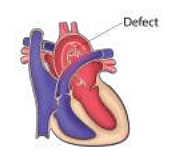
- A defect in which of the following aortic arches causes the defect shown in the image?
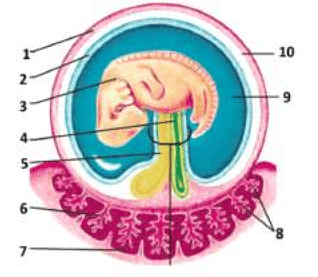
- Which of the following structures develops from the structure marked 4?
View More Questions
Top NEET PG Questions
- A patient hailing from Delhi presents with fever, arthralgia, and extensive petechial rash for 3 days. Lab investigations revealed a hemoglobin of 9 g/ dL, a white blood cell count of 9000 cells/mm3, a platelet count of 20000 cells/mm3, and a prolonged bleeding time. The clotting time was normal. What is the most likely diagnosis?
- Which of the following statements is true about Trichomonas vaginalis?
- A lady from West Rajasthan presented with an ulcer surrounded by erythema on the right leg. Microscopy of the biopsy from the edge of the ulcer showed organisms with dark staining nuclei and kinetoplast. What is the most likely causative agent?
- A child presents with a fever and a rash. Urine examination showed cells with owl's eye appearance. What is the most likely diagnosis?
- Infection with Clonorchis sinensis is associated with an increased risk of__?
View More Questions