Question:
A 10 kg tomato pulp is concentrated from an initial moisture content of ( 90% ) (wet weight basis) to ( 35% ) (wet weight basis). The weight of the concentrate in kg is _____ (round off to 2 decimal places).
A 10 kg tomato pulp is concentrated from an initial moisture content of ( 90% ) (wet weight basis) to ( 35% ) (wet weight basis). The weight of the concentrate in kg is _____ (round off to 2 decimal places).
Show Hint
The weight of the concentrate can be calculated using the formula:
[
{Final weight} = frac{{Initial dry matter}}{{Final dry matter fraction}}.
]
Ensure proper rounding to match the required precision.
Updated On: Feb 2, 2025
Show Solution

Verified By Collegedunia
Solution and Explanation
To determine the weight of the concentrate, let us calculate the dry matter in the tomato pulp before and after concentration:
Step 1: Calculate the weight of dry matter.
The weight of dry matter in the tomato pulp remains constant during the concentration process. The initial dry matter content is:
\[ \text{Dry matter} = \text{Total weight} \times (1 - \text{Moisture fraction}) \]Substituting the given values:
\[ \text{Dry matter} = 10 \, \text{kg} \times (1 - 0.90) = 10 \, \text{kg} \times 0.10 = 1.0 \, \text{kg}. \] Step 2: Determine the final weight of the concentrate.At **35%** moisture content, the dry matter fraction is:
\[ \text{Dry matter fraction} = 1 - 0.35 = 0.65. \]The final weight of the concentrate is:
\[ \text{Final weight} = \frac{\text{Dry matter}}{\text{Dry matter fraction}} = \frac{1.0 \, \text{kg}}{0.65} \approx 1.54 \, \text{kg}. \] Step 3: Round off the result.The weight of the concentrate is approximately **1.54 kg**, which lies within the range **1.50 to 1.60 kg**.
Was this answer helpful?
0
0
Top GATE XL Food Technology Questions
- Match the plant products in Group 1 with the plant species in Group 2 that produce them and the respective plant parts in Group 3 where they accumulate the most.
Group 1 Group 2 Group 3 (P) Liquorice (i) Cinchona calisaya (a) Leaf (Q) Quinine (ii) Lawsonia inermis (b) Root (R) Henna (iii) Glycyrriza glabra (c) Flower (S) Saffron (iv) Papaver somniferum (d) Bark (v) Crocus sativus (e) Seed - Match the plant products in Group 1 with the plant species in Group 2 that produce them and the respective plant parts in Group 3 where they accumulate the most.
Group 1 Group 2 (P) Net primary productivity (i) Total amount of produced by autotrophs energy (Q) Gross primary productivity (ii) A type of mutualism where one species is benefitted more than the other (R) Net productivity (iii) Amount of energy stored by autotrophs after respiration (S) Secondary productivity (iv) Unused amount of energy after consumption by heterotrophs - Identify the CORRECT combination(s) of plant natural products and the categories they belong to.
- Identify the CORRECT combination(s) between the enzymes in Group 1 and the reactions in Group 2 they catalyze.
Group 1 Group 2 (P) Cinnamate-4-hydroxylase (i) L-phenylalanine → Cinnamic acid (Q) Glycerate kinase (ii) Glyceraldehyde 3-phosphate → dihydroxyacetone phosphate (R) PEP carboxylase (iii) Glycolate + O\(_2\) → Glyoxylate + H\(_2\)O\(_2\) (S) Nitrate reductase (iv) NO\(_3^-\) + NAD(P)H + H\(^+\) → NO\(_2^-\) + NAD(P)\(^+\) + H\(_2\)O - Which of the following cocci is/are examples of division in one plane
View More Questions
Top GATE XL Questions
- The CORRECT order of electronegativity is
- Which one of the following is the CORRECT representation of the variation of the Gibbs free energy (G) of a substance with temperature (T) at constant pressure?
- Among the following, the structure representing histidine is
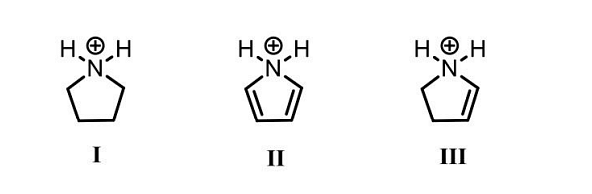
- The CORRECT order of acidity of the following compounds is
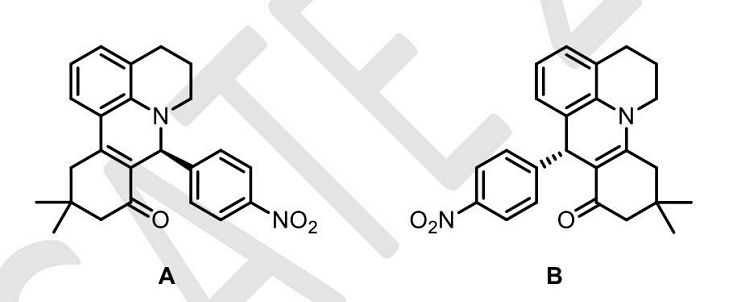
- The molecules A and B are a pair of___
View More Questions